Mid-Century Still Life Painting by Hubert Gaillard


Mid-Century Still Life Painting by Hubert Gaillard
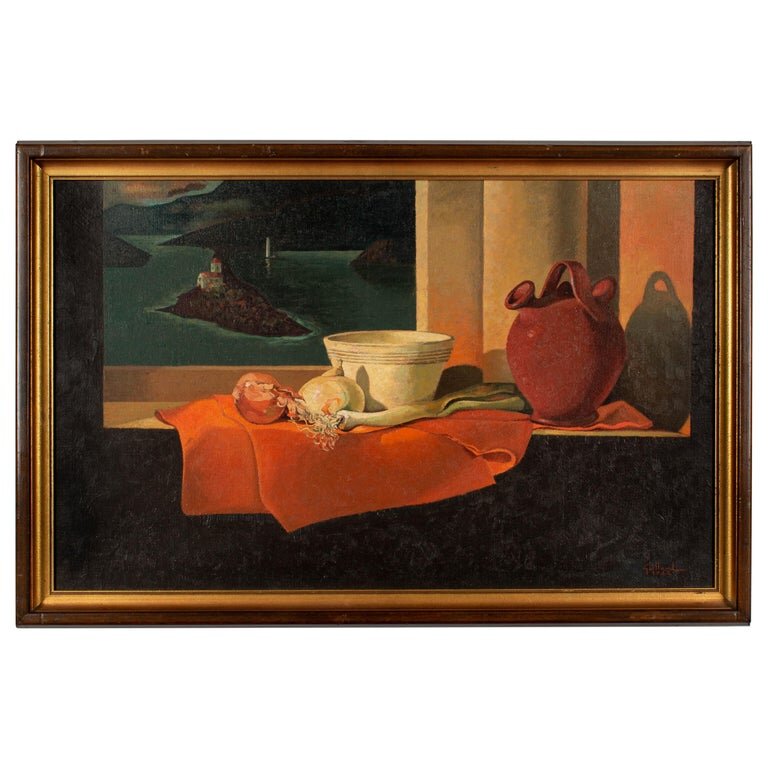
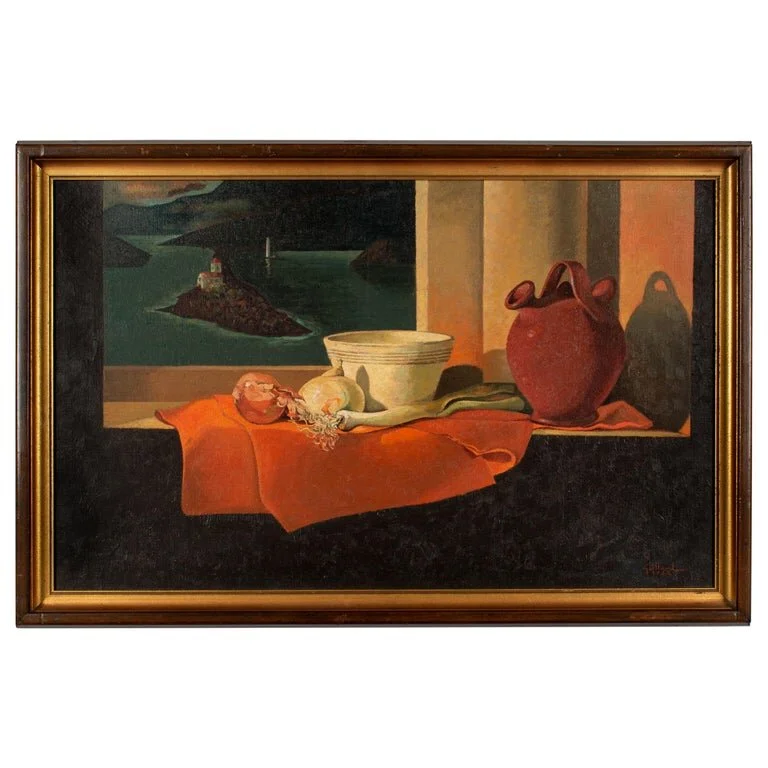
A Mid-Century Modern still life painting by French Realist artist Hubert Gaillard (1912-2003) entitled “La Cruche” (the jug). Oil on canvas. Signed and dated lower right: Gaillard 1962. A dramatically lit and richly colored still life depicting objects on a shallow ledge or table including a terracotta pottery jug, ceramic bowl, onions and a leek. The background view of a moonlit island and lighthouse lends the composition a surreal aspect. Well executed in a realist style. Period frame shows some wear.
Hubert Gaillard was born on August 24, 1912 in Saint-Didier-sur-Chalaronne Ain and died September 26, 2003 in Lyon. In 1935 he went to Paris to follow the courses of the National School of Decorative Arts until 1939, under the direction of Leo Deshairs. In the 1950s, following the sensitive structured and geometric style of Cubism, he produced a number of oil (on canvas or wood) originals. In the 1960s, he was experimenting with glazes in cold and warm tones. Already form, space and light were the components of his paintings he exhibited in 1962. He also met the Reality Group whose leader was Henri Cadiou and a long friendship developed between them.
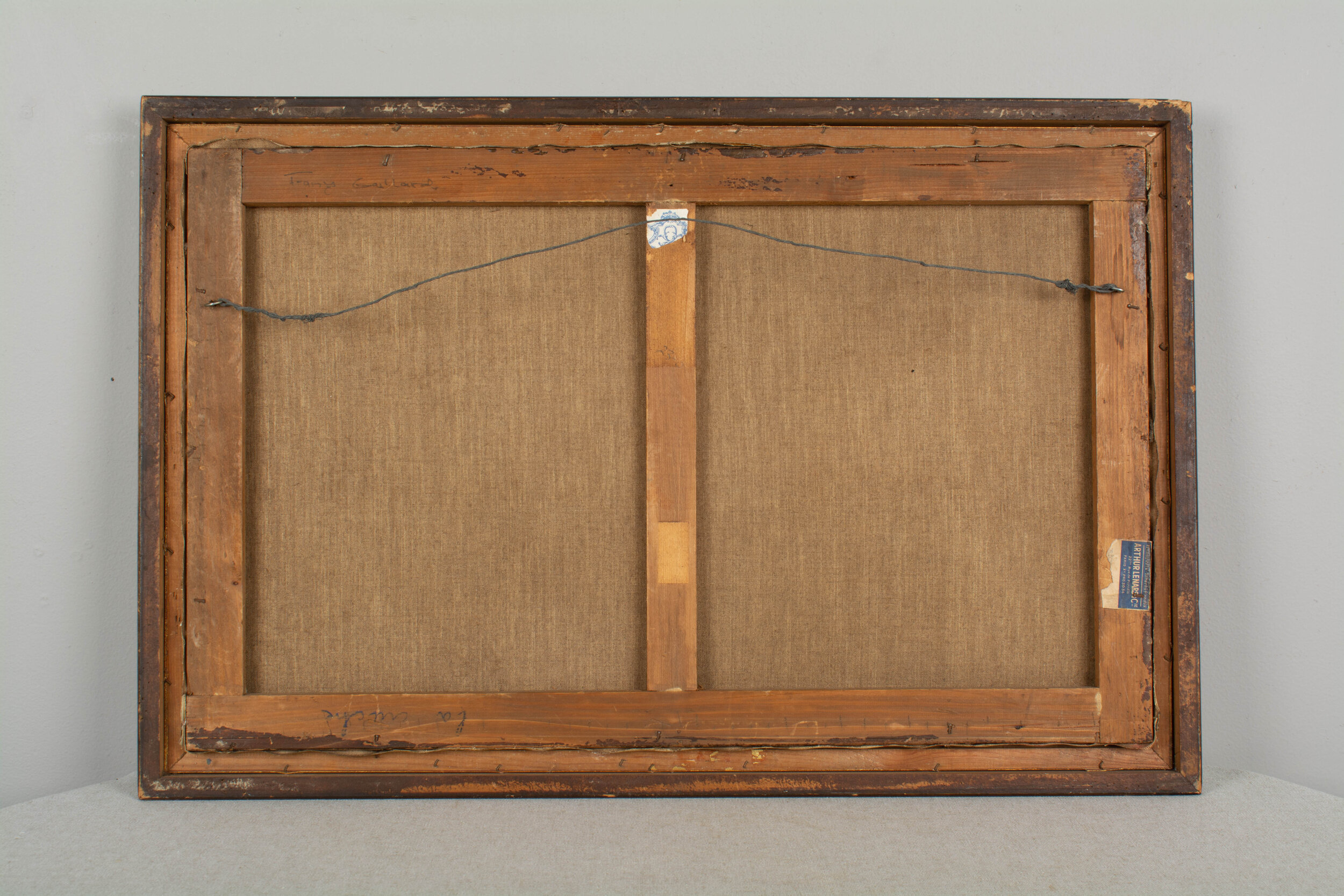
On the back of the stretcher is a small remnant of the distinctive blue and white label that read: from the Vincent Price collection Sears Roebuck and Co. In 1966, Sears and Roebuck, then America’s most popular retailer hired Vincent Price to sell fine art to the public. An accomplished connoisseur and collector, Price already had contacts in the art world and was given carte blanche to choose the works for the initial collection. The program sold over 50,000 original masterworks, etchings, and folk pottery across department stores to make art accessible to the general public. This painting represents the exact kind of "accessible masterpiece" the program intended to bring to the public.
Overall dimensions: 17.5”H x 26.5”W x 1.75”D
Sight: 14.5” x 23.5”
Shipping: $80
Item id:RD191
More Art
A Mid-Century Modern still life painting by French Realist artist Hubert Gaillard (1912-2003) entitled “La Cruche” (the jug). Oil on canvas. Signed and dated lower right: Gaillard 1962. A dramatically lit and richly colored still life depicting objects on a shallow ledge or table including a terracotta pottery jug, ceramic bowl, onions and a leek. The background view of a moonlit island and lighthouse lends the composition a surreal aspect. Well executed in a realist style. Period frame shows some wear.
Hubert Gaillard was born on August 24, 1912 in Saint-Didier-sur-Chalaronne Ain and died September 26, 2003 in Lyon. In 1935 he went to Paris to follow the courses of the National School of Decorative Arts until 1939, under the direction of Leo Deshairs. In the 1950s, following the sensitive structured and geometric style of Cubism, he produced a number of oil (on canvas or wood) originals. In the 1960s, he was experimenting with glazes in cold and warm tones. Already form, space and light were the components of his paintings he exhibited in 1962. He also met the Reality Group whose leader was Henri Cadiou and a long friendship developed between them.
On the back of the stretcher is a small remnant of the distinctive blue and white label that read: from the Vincent Price collection Sears Roebuck and Co. In 1966, Sears and Roebuck, then America’s most popular retailer hired Vincent Price to sell fine art to the public. An accomplished connoisseur and collector, Price already had contacts in the art world and was given carte blanche to choose the works for the initial collection. The program sold over 50,000 original masterworks, etchings, and folk pottery across department stores to make art accessible to the general public. This painting represents the exact kind of "accessible masterpiece" the program intended to bring to the public.
Overall dimensions: 17.5”H x 26.5”W x 1.75”D
Sight: 14.5” x 23.5”
Shipping: $80
Item id:RD191
Magnificent 19th Century French bronze mounted onyx centerpiece by H. Journet & Cie.
Wide shallow bowl is crafted from banded variegated onyx with distinct orange and cream tones. Three heavy cast ormolu cherubs surround the bowl, symmetrically arranged and acting as architectural supports. Each cherub is depicted in a distinct, lifelike stance, leaning forward with arms outstretched to brace the heavy vessel. The bronze figures retain a bright reflective gold finish characteristic of high-quality Parisian metal foundry work. Thick, detailed laurel garlands swag around the bowl, connecting the figures. Shaped carved onyx base is mounted with three cartouches decorated with shells and foliate motifs and is raised on decorative gilt bronze feet. Stamped along the side of a cartouche: Sté. des Onyx H. Journet & Cie. 24 Bd. Italiens. In very good condition, with old repair to the underside of the onyx base. A few small spots of oxidation. Founded as Alphonse Pallu & Cie in 1858, the company specialized in luxury decorative objects and furniture utilizing Algerian onyx-marble combined with ormolu bronze. Henri Journet took over direction of the firm around 1875, renaming it H. Journet & Cie.
Circa 1875-1890
Dimensions: 21" x 21" x 16.75"H
#83488
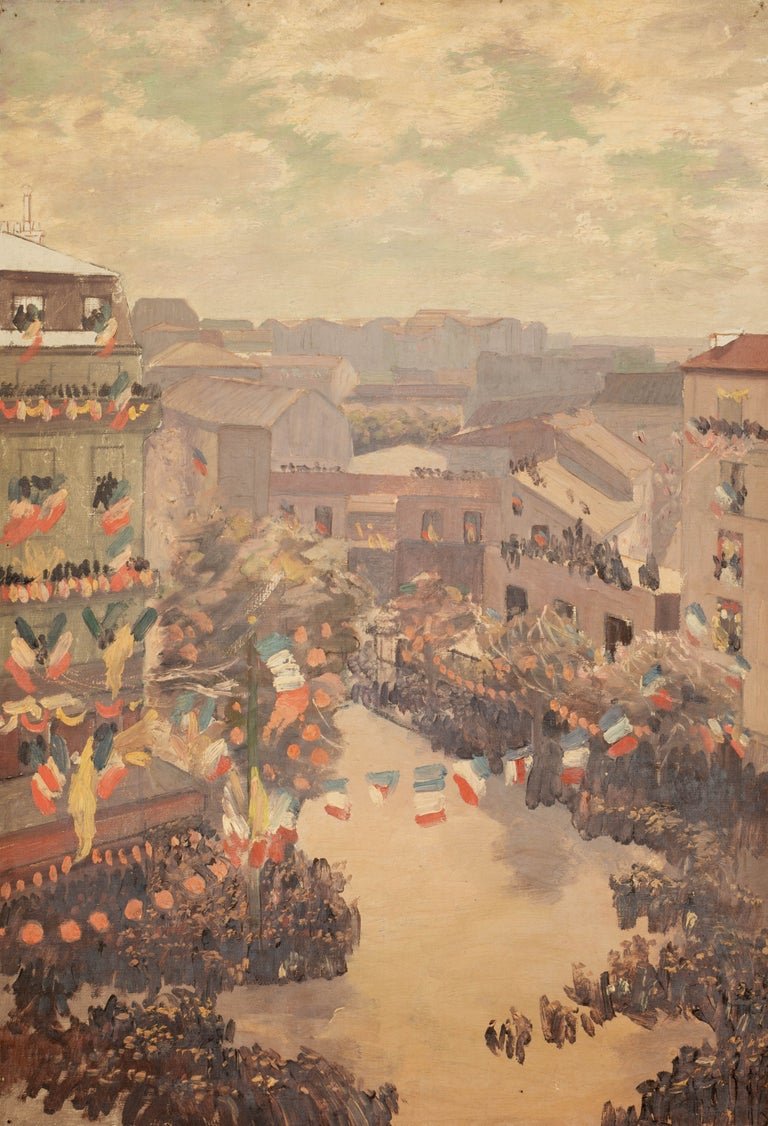
An unsigned oil on canvas in the style of Edmond Lachenal (1855-1948). Very similar in style and muted color palette to the small painting entitled Les funérailles de Victor Hugo, le cortège rue Soufflot (The Funeral of Victor Hugo, the Procession on Rue Soufflot), depicting the massive national funeral procession of French writer Victor Hugo arriving at the Panthéon via Rue Soufflot on June 1, 1885. Rather than being highly idealized or allegorical, the painting has an eye-witness quality. The canvas is dominated by buildings displaying the French tricolor flag with a bird's eye view of a dense crowd of citizens packed tightly along the sidewalks with residents and onlookers leaning out of windows and over balconies to watch the procession. Oil on canvas, unstretched. Circa 1885. Shipping: $40
Dimensions: 22.5" x 16"
#RD239
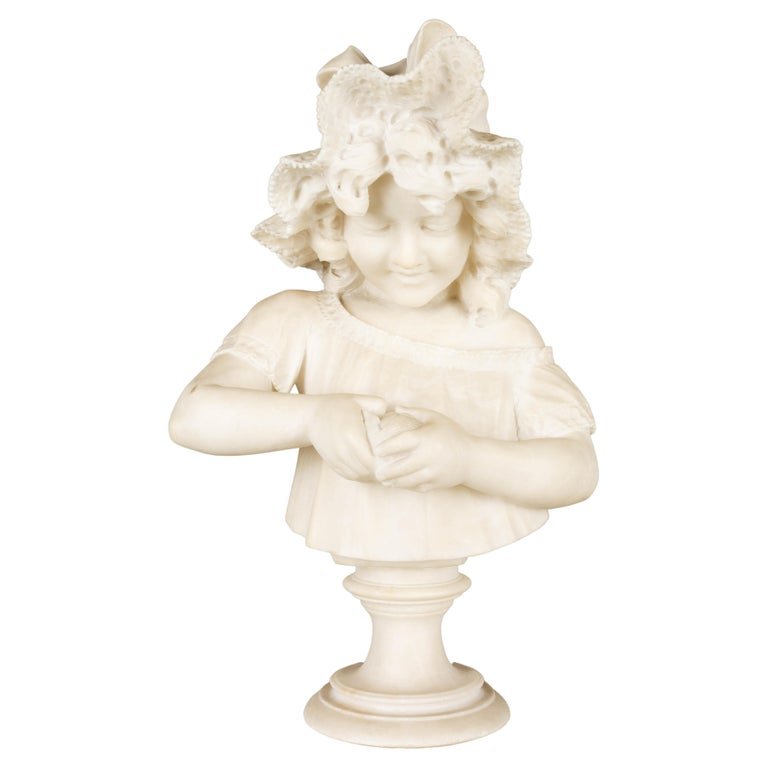
A 19th Century Italian alabaster bust of a young girl with a frilled bonnet peeling a orange. After a work by Italian sculptor Pietro Giorgi. There is an old repaired crack at the foot of pedestal base, but it is not structural. Circa 1890-1900. Shipping: $150
Dimensions: 16"H X 17"W x 10"D. Weight: 17.6 Lbs.
#80255
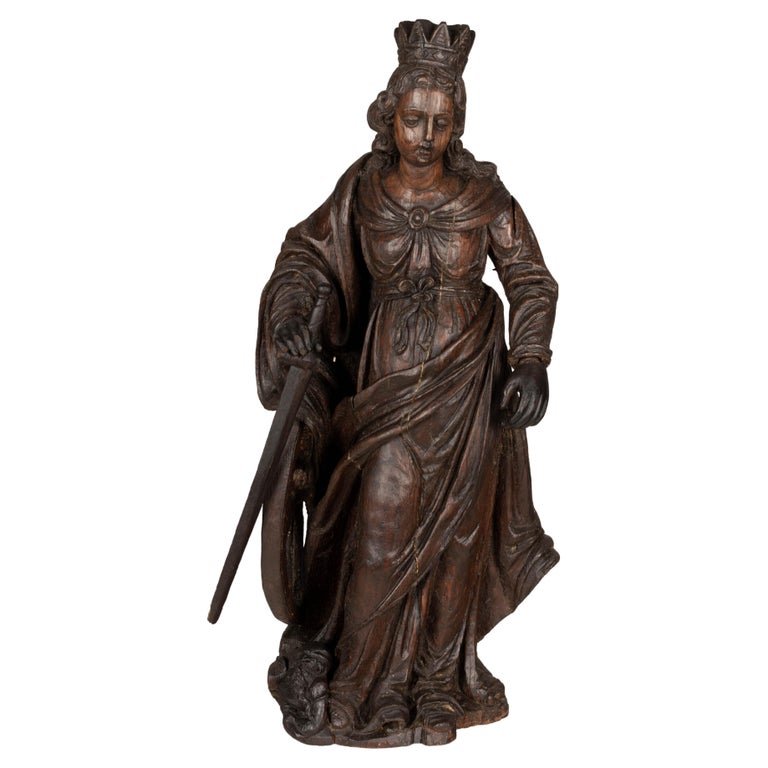
An 18th century carved oak statuette of Saint Catherine of Alexandria, probably South German, depicting a finely carved figure in pooling robe with bow cinched at the waist, scroll carved hair surmounted by a crown, with sword at hand, a wheel at side, and gnome beside her foot. Minor losses and repairs at feet and hands. Dark stained with waxed patina. Wire on the back to display on the wall. Dimensions are 22”high 6” deep 10”wide about weight: 10.5 lbs. Shipping and Packaging $60.00
A small French mpressionist style plein air verdant landscape painting featuring a lake or pond in the foreground, surrounded by trees. Oil on canvas board. Unsigned. Wood frame with linen liner. Circa 1900s. Shipping: $40
Dimensions:
Frame: 15.5"W x 12.5"H x .75"D
Sight: 11.25"W x 8"H
#RD410
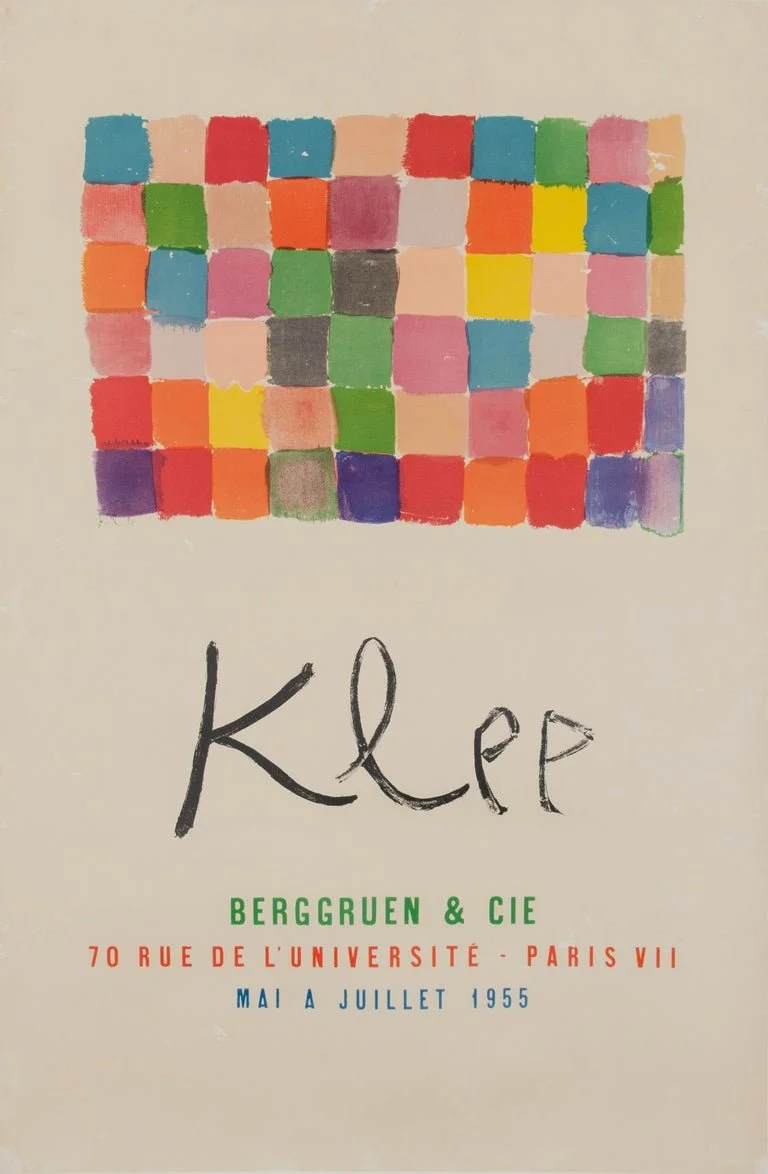
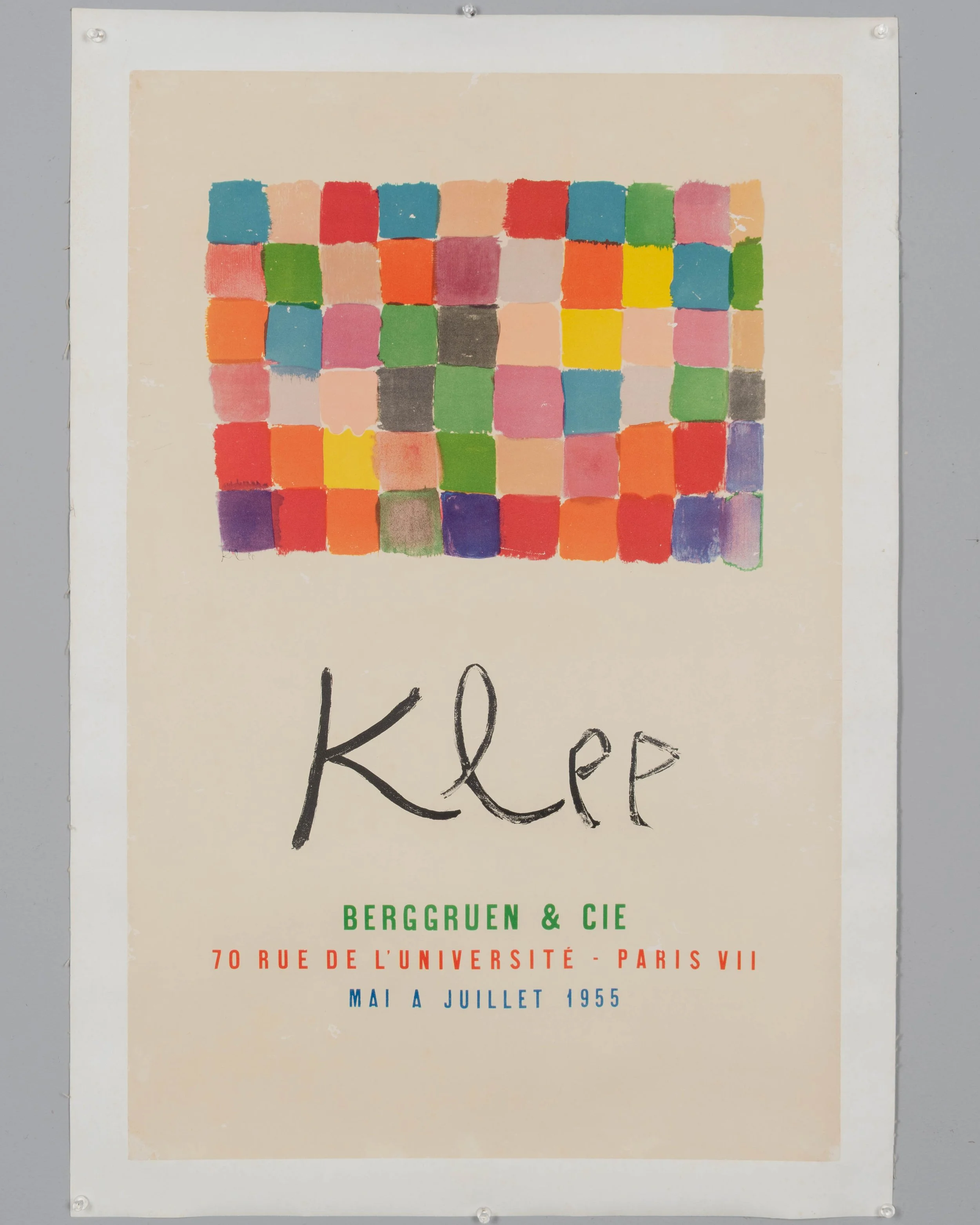
An original Mid Century French lithograph exhibition poster for Paul Klee, published by Galerie Berggruen & Cie, Paris. The design features a grid of colorful geometric squares, a signature style of the Swiss-German artist. The exhibition was held from May to July 1955 at the gallery located at 70 Rue de l'Université, Paris. Some minor paper losses, mostly around the edges. Conservation linen backing. Shipping: $30
Dimensions: 19.75"W x 30.25"H
#RD404
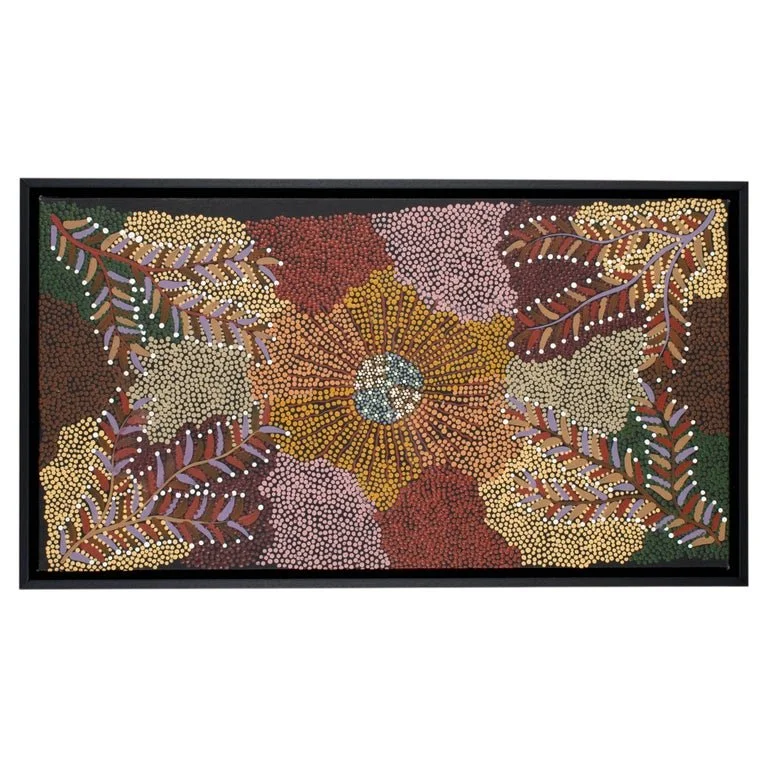
Eunice Napangardi (1950-2005) Australia Aboriginal
Yuparli Bush Banana Dreaming Painting
This is stylized depiction of the bush banana plant with a central radiating flower cluster and bulbous pod surrounded by the creeping, twining vines and narrow leaves that climb desert trees. It is created using a traditional aboriginal pointillist dot pattern technique. Made famous by the Central and Western Desert art movements of the 1970s, this technique uses sticks or brushes to apply fine or bold dots. Originally used in ceremonial body painting and sand art, dots were often used to create a shimmering aura, creating vibrating energy fields, optical illusions, and abstract landscapes. The Bush Banana is a central, sacred totem and vital traditional food source in Warlpiri culture and was a signature theme of Eunice Napangardi.
Acrylic on canvas
Circa 1990
Signed Eunice on back and OUTBACK ART Stamp: Authentic Aboriginal Art
Framed dimensions: 27.5" x 14.75" x 2"D
Aboriginal dream paintings are made to be viewed from above and have no intended orientation. May be displayed vertically or horizontally. Newly framed and wired both ways.
#RD390 Shipping: $80
Eunice Napangardi, a pioneering women in the Western Desert art movement, initially assisted male painters (most notably her partner, Kaapa Tjampitjinpa) before emerging as an artist herself in the late 80s. She was a dedicated and prolific artist, sometimes painting up to ten hours a day. Over her career, she completed significant commissions, including a large work for the Alice Springs Airport. She also travelled extensively for exhibitions. In 1991 she showed work in Sydney with Maxie Tjampitjinpa, and in 1992 in an international exhibition in Washington, D.C. She was also one of only three women selected for a major Bicentennial Traveling Exhibition in 1988.
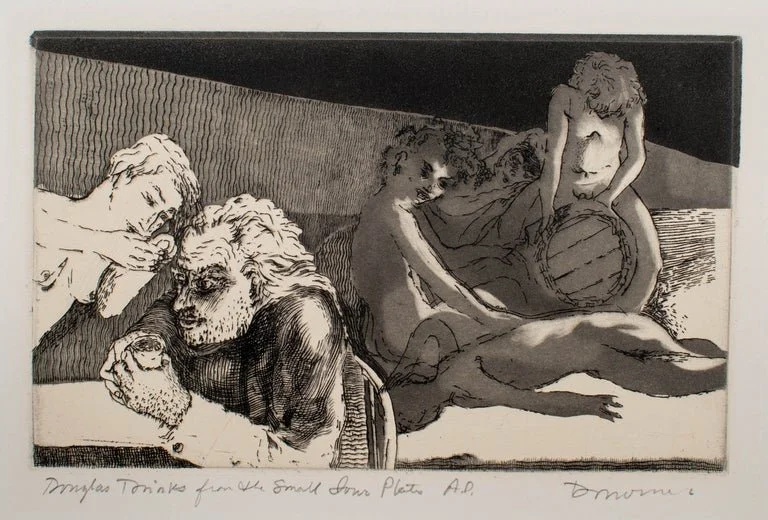
An original intaglio print entitled “Douglas Drinks” by contemporary printmaker David Donovan
A surreal, dreamlike image of a man and a woman with figures on a wine barrel in the background. The title refers to the artist's friend Douglas Kinsey, a painter, printmaker, and passionate educator at The University of Notre Dame.
Copper engraving and etching with aquatints and scraping.
This impression was printed in black oil-based ink with gampi chine collé impression on Fabriano CMF paper Plate 7 from a set of 9 intaglio images titled "A Portfolio of Small Iowa Prints"
Artist's proof. Circa 1989
Signed and titled in pencil
Framed with deep cut bevel mat and museum glass.
Dimensions:
Frame: 16.5" x 13.75"
Sheet size: 14" x 12
Shipping: $50
#RD403
A large still life painting by Germano Russo (b.1935) featuring a round table set with colorful yellow and red and white floral arrangements, a teapot, and blue china positioned on a bright sunlit garden terrace with a seaside view. Beautiful Impressionist style with bright vivid color and thick impasto technique. Oil on masonite. Signed lower left: G Russo 1975. Original frame is in good condition with minor gilt loss. Linen liner with some foxing.
Overall framed dimensions: 47"W x 36.5"H
Painting: 40"W x 29.5"H
Germano Russso and his twin brother Enzo Russo were born and raised in Florence, Italy. They attended the School of Fine Arts at the University of Florence with its traditional formal training. They were admitted two years before the mandatory age of eighteen, after being granted a special dispensation from the Italian Ministry of Education. Enzo was the first European artist to be awarded a grant from the Commonwealth Fund for the Arts. With the grant Enzo made a tour critically assessing the curriculum and quality of art schools in the United States. After his research was completed, Enzo stayed on in the US working as a professional artist. Germano Russo arrived in the United States in 1958 for a show of his work at “The Contemporaries” Gallery and since then has exhibited in New York, Philadelphia, St. Louis, and San Francisco. He lived and worked in both in US and Italy where he kept studios. Both brothers carried on important careers in the art world throughout the U.S.
Germano Russo's painting style is rooted in Impressionism and Post-Impressionism, focusing heavily on figurative subjects and tranquil everyday scenes. His most defining technical trait is his heavy impasto technique, or generous, thick application of oil paint. He utilized a palette knife and heavy brushwork to build layered, physical textures on masonite and canvas. His subjects were often in luminous, open air settings, against vibrant, sun-drenched European backdrops, such as seaside balconies, coastal cities, and lush parks. His work heavily emphasizes natural, warm light catching the edges of his subjects and evoke a peaceful, romanticized view of daily life.
#RD416