18th Century Louis XVI Duchesse en Bateau Chaise



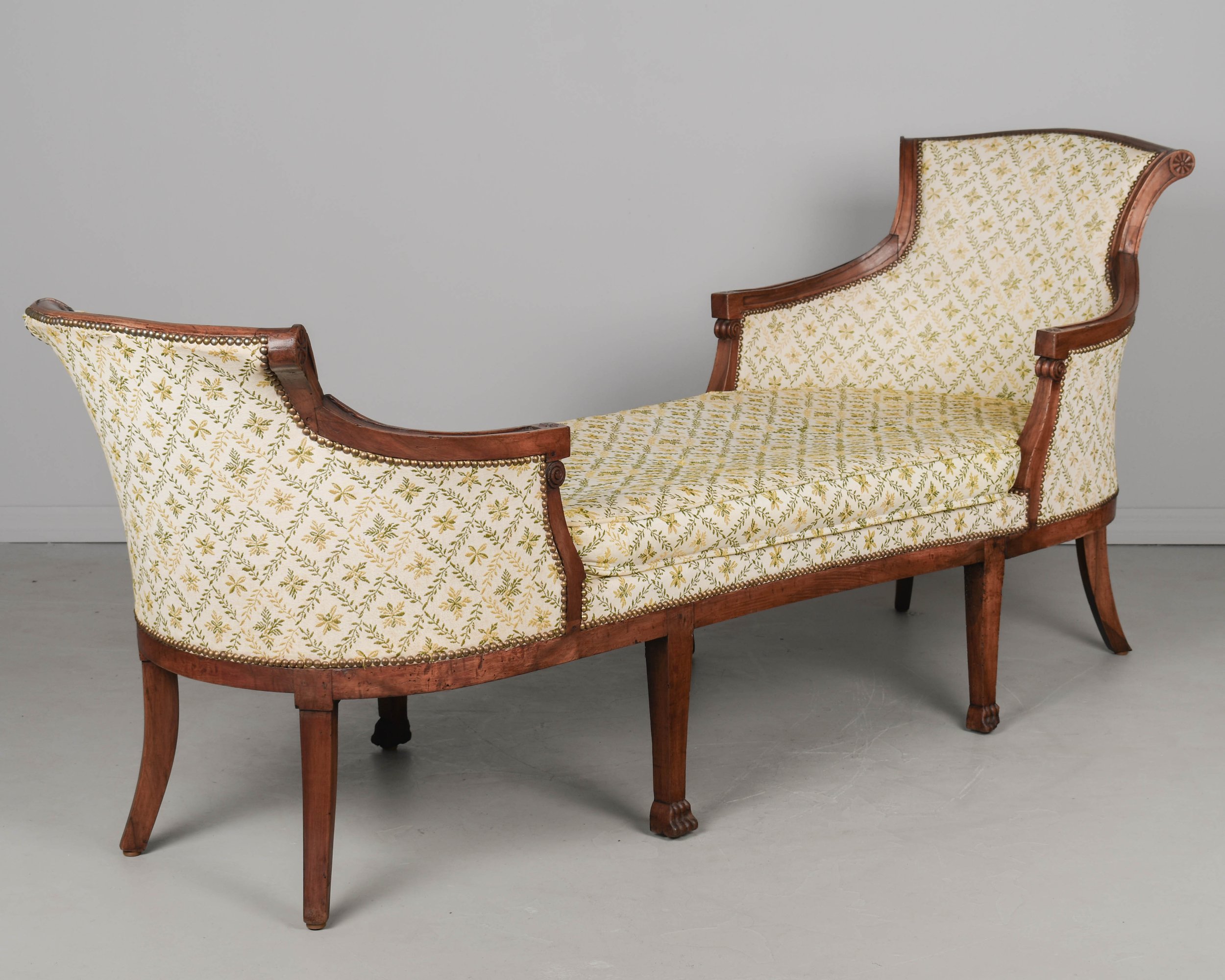

18th Century Louis XVI Duchesse en Bateau Chaise
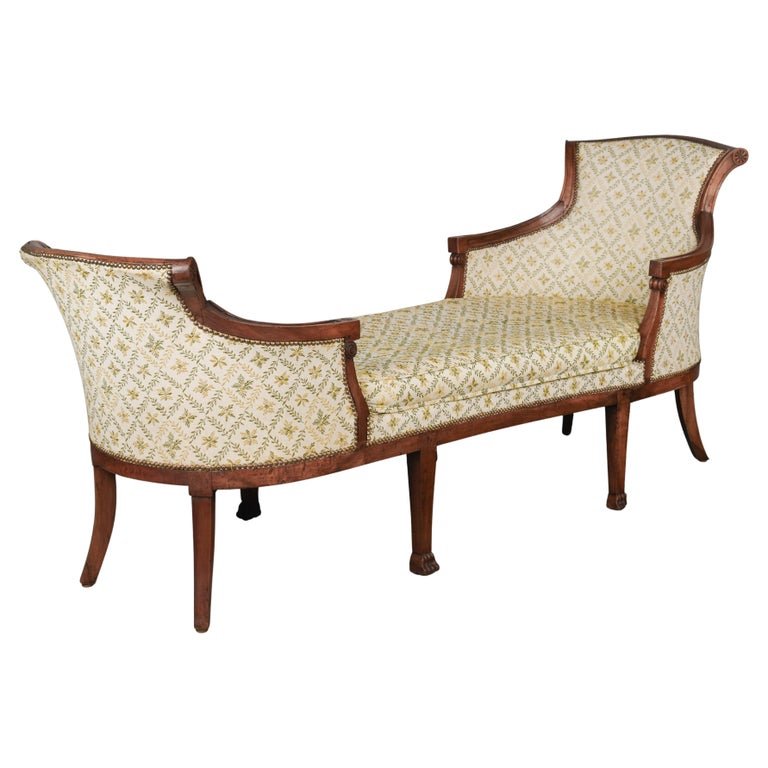
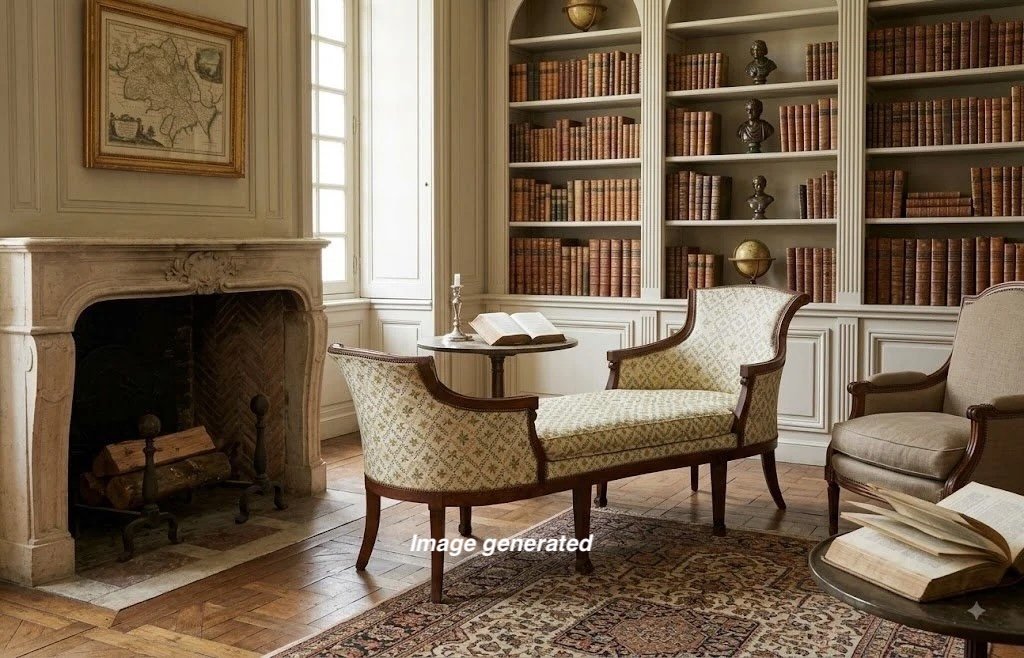
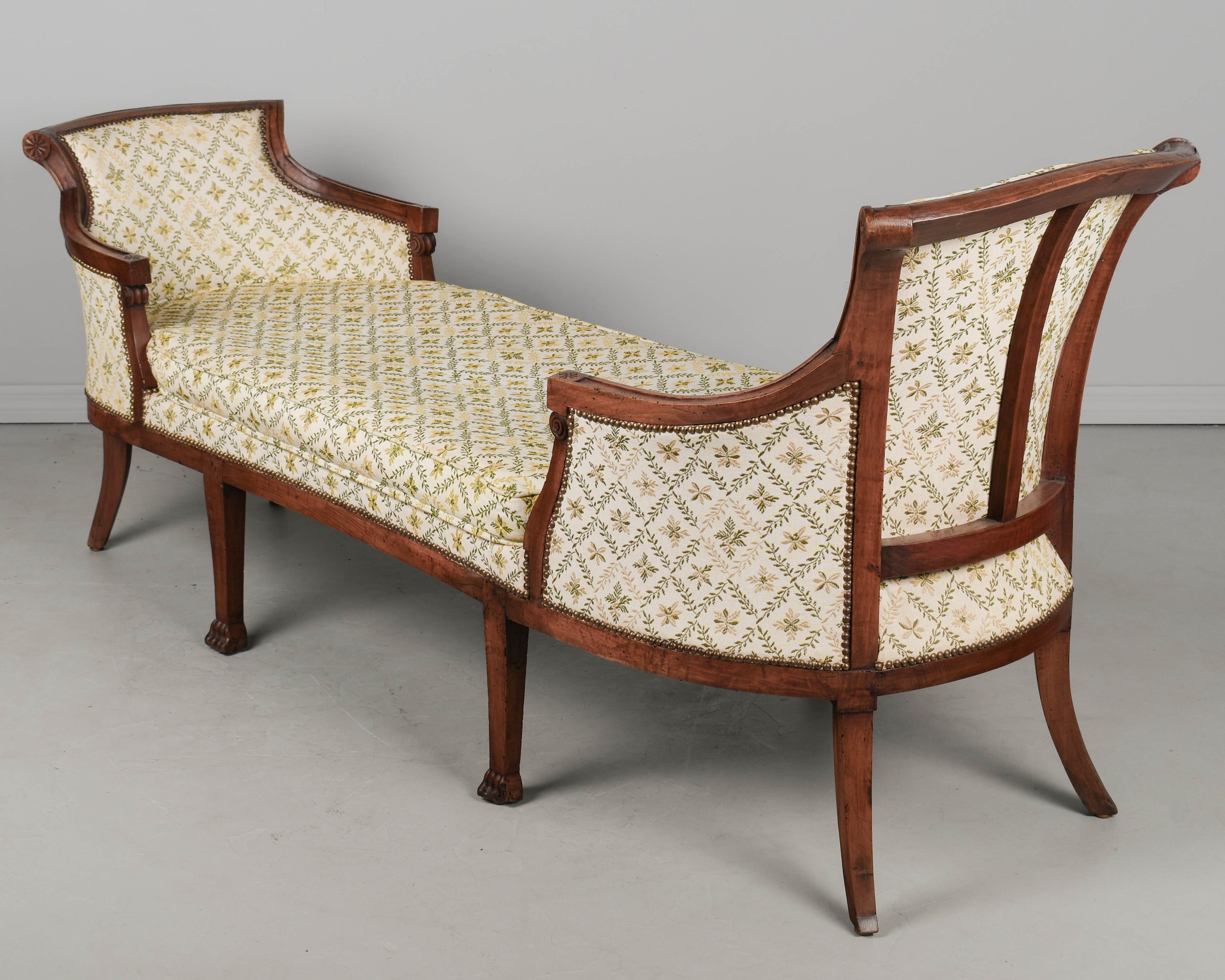
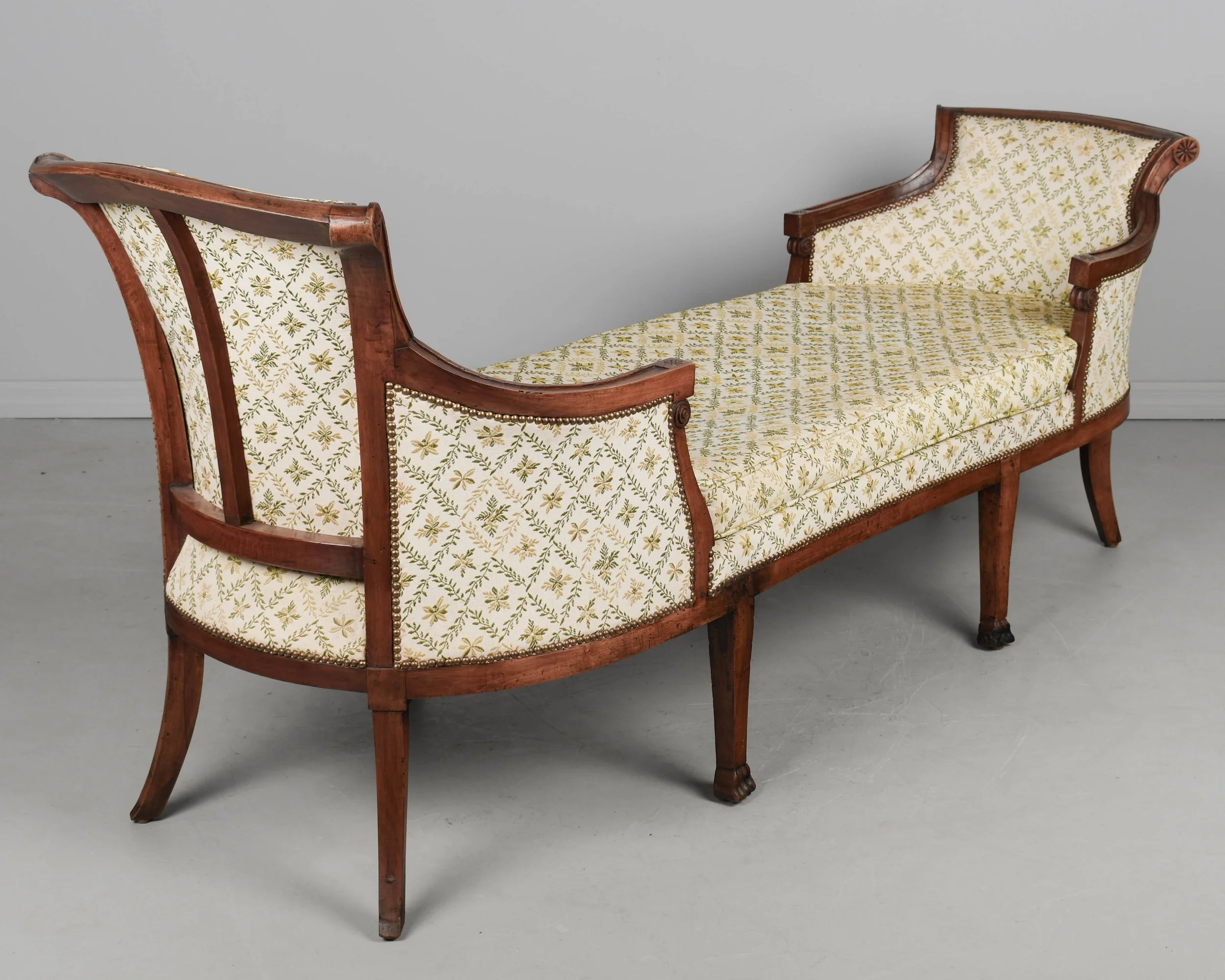
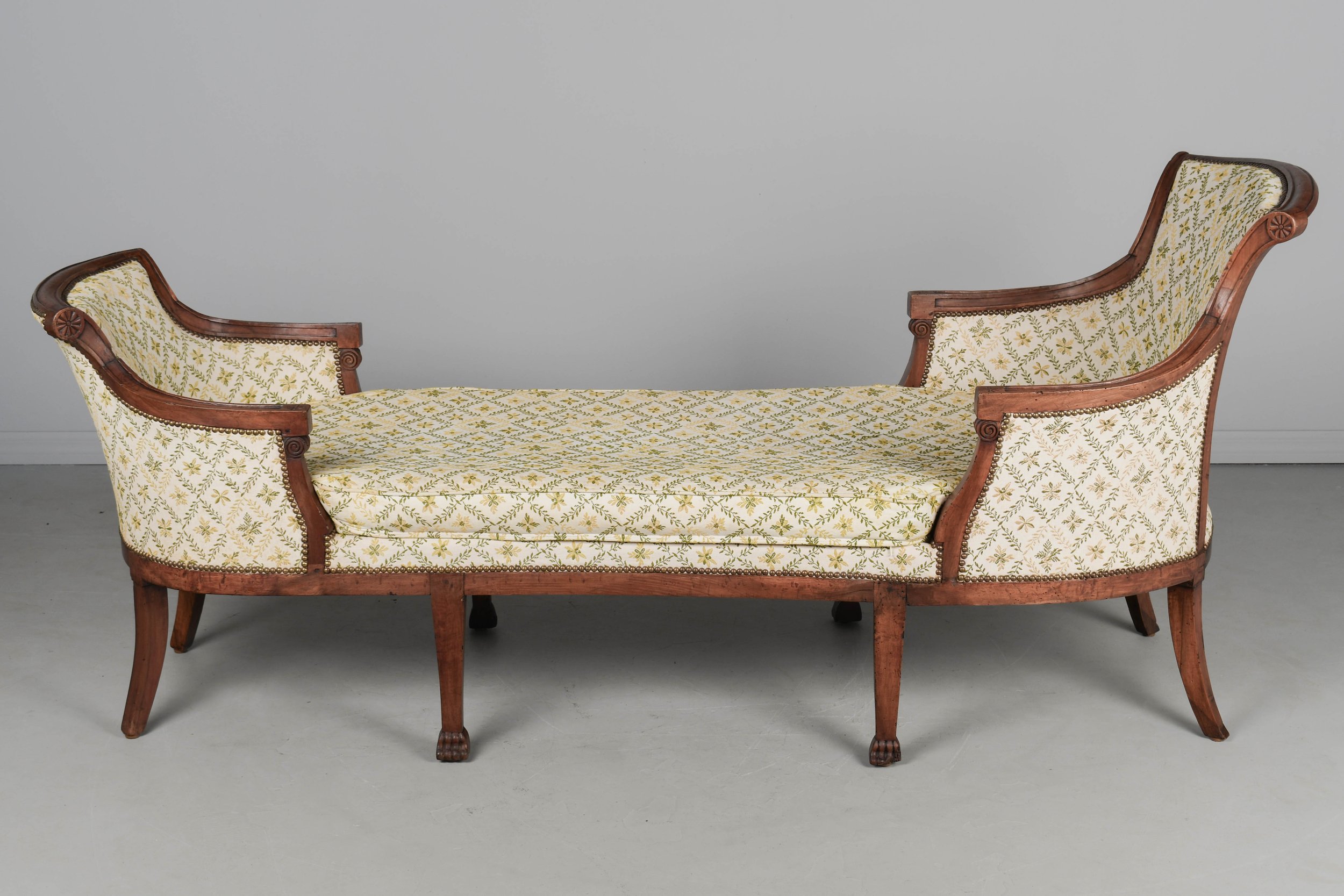
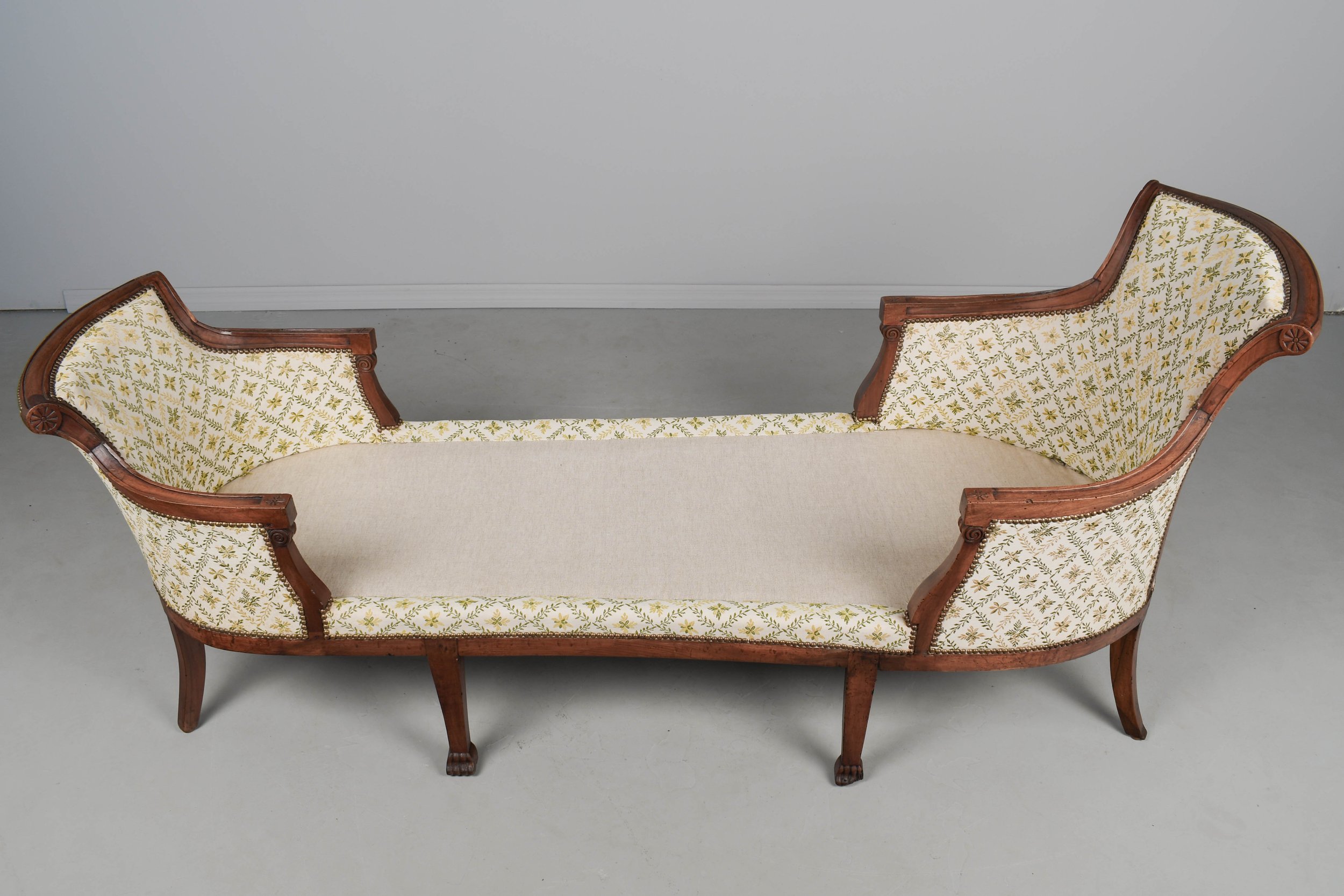
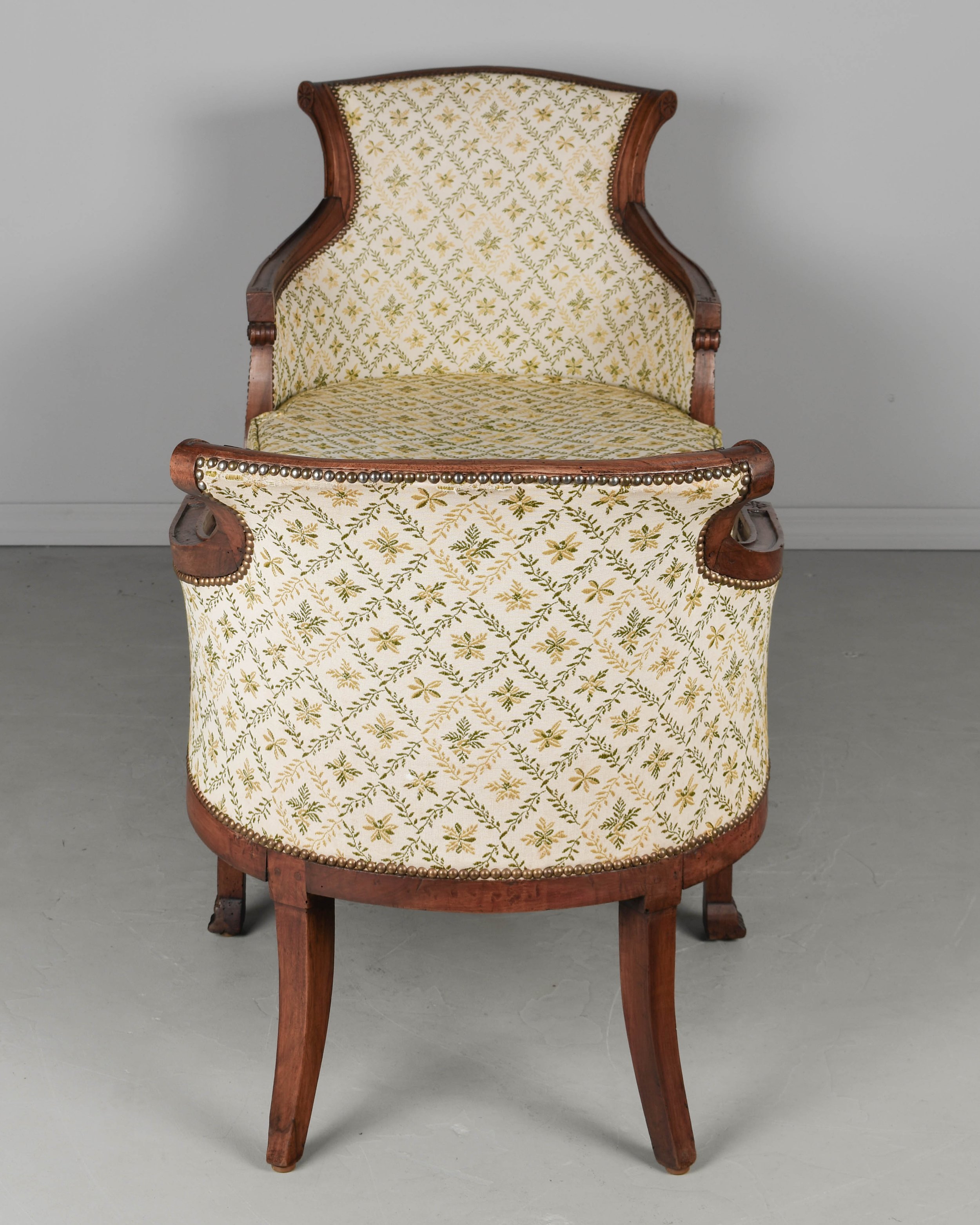
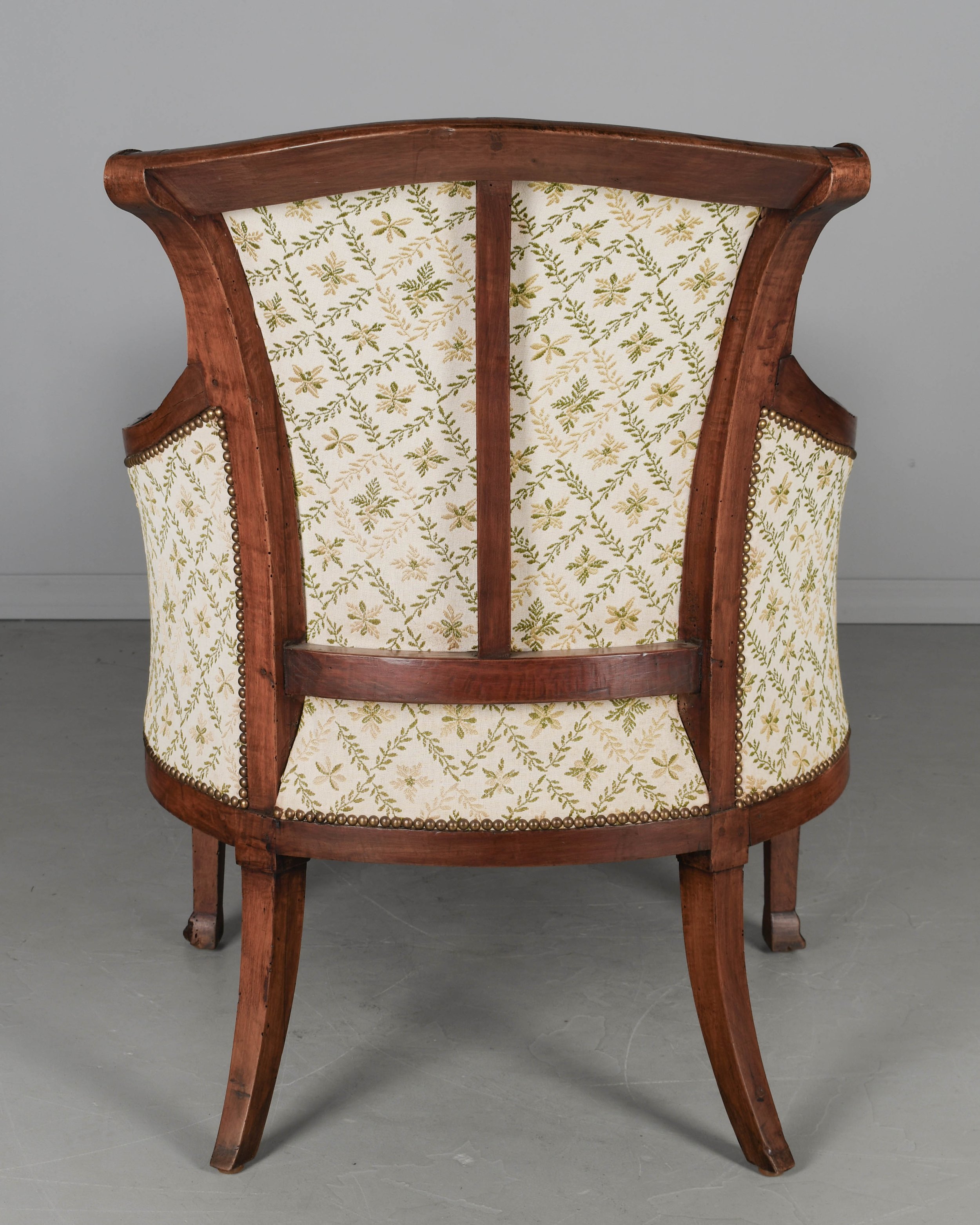
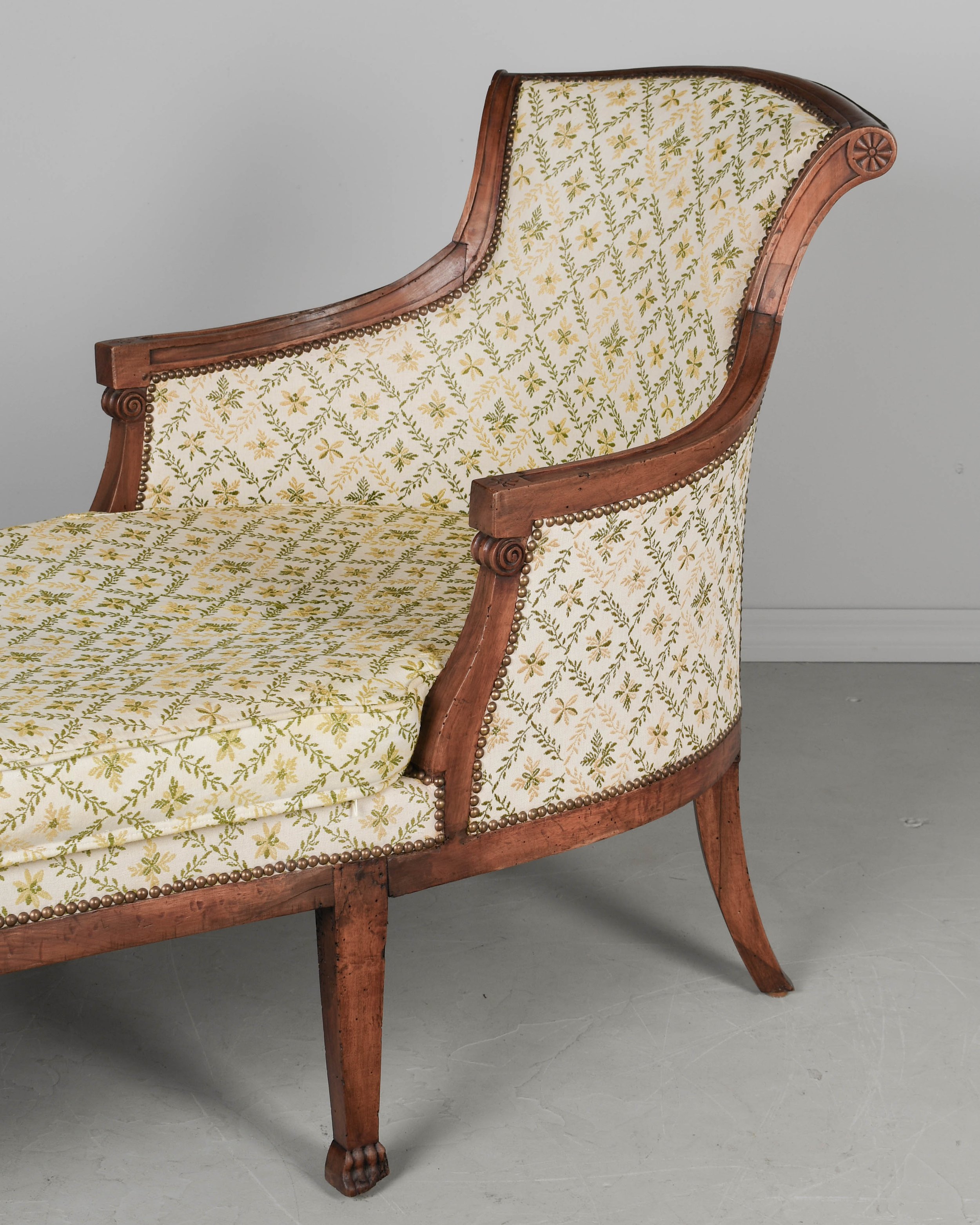
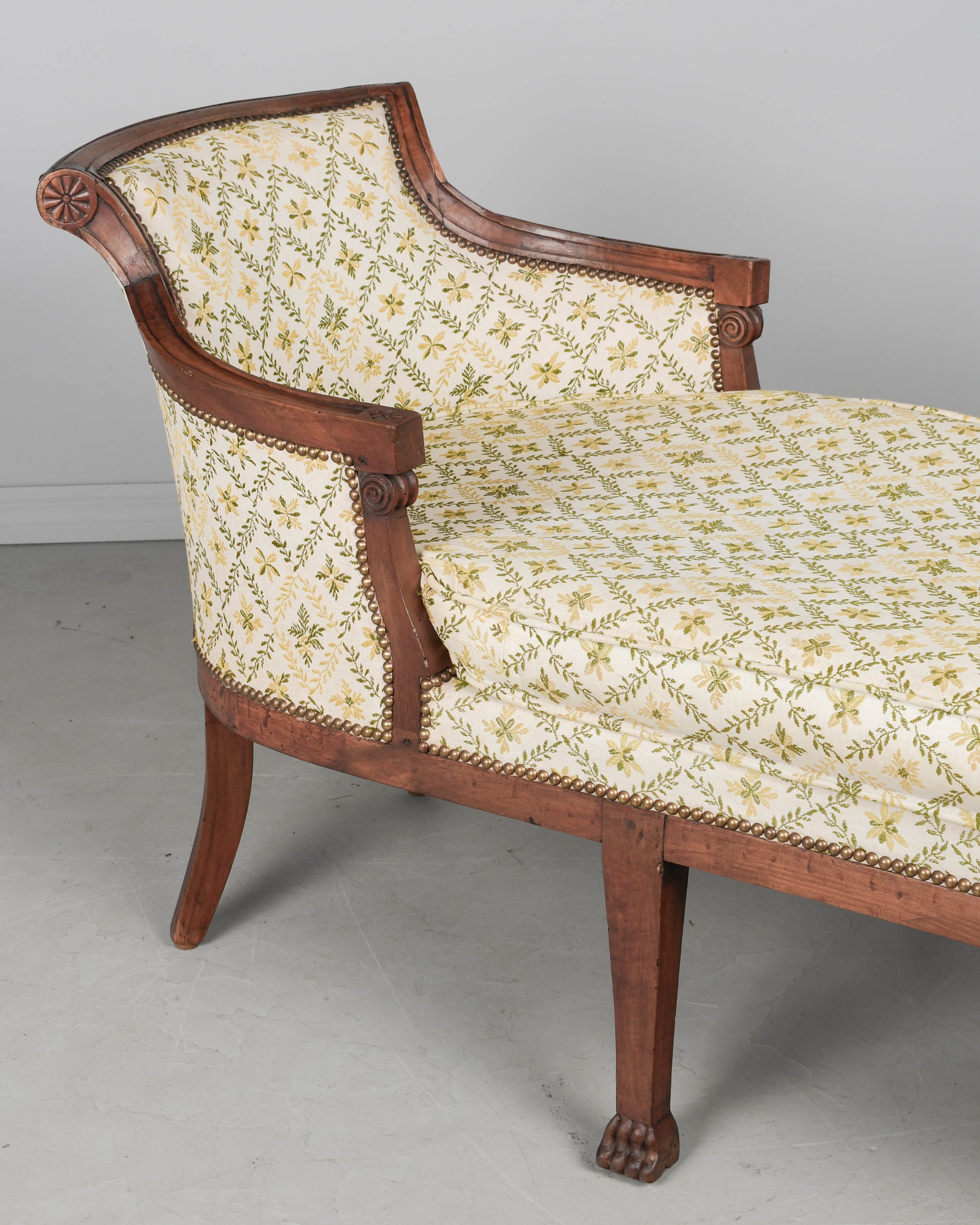
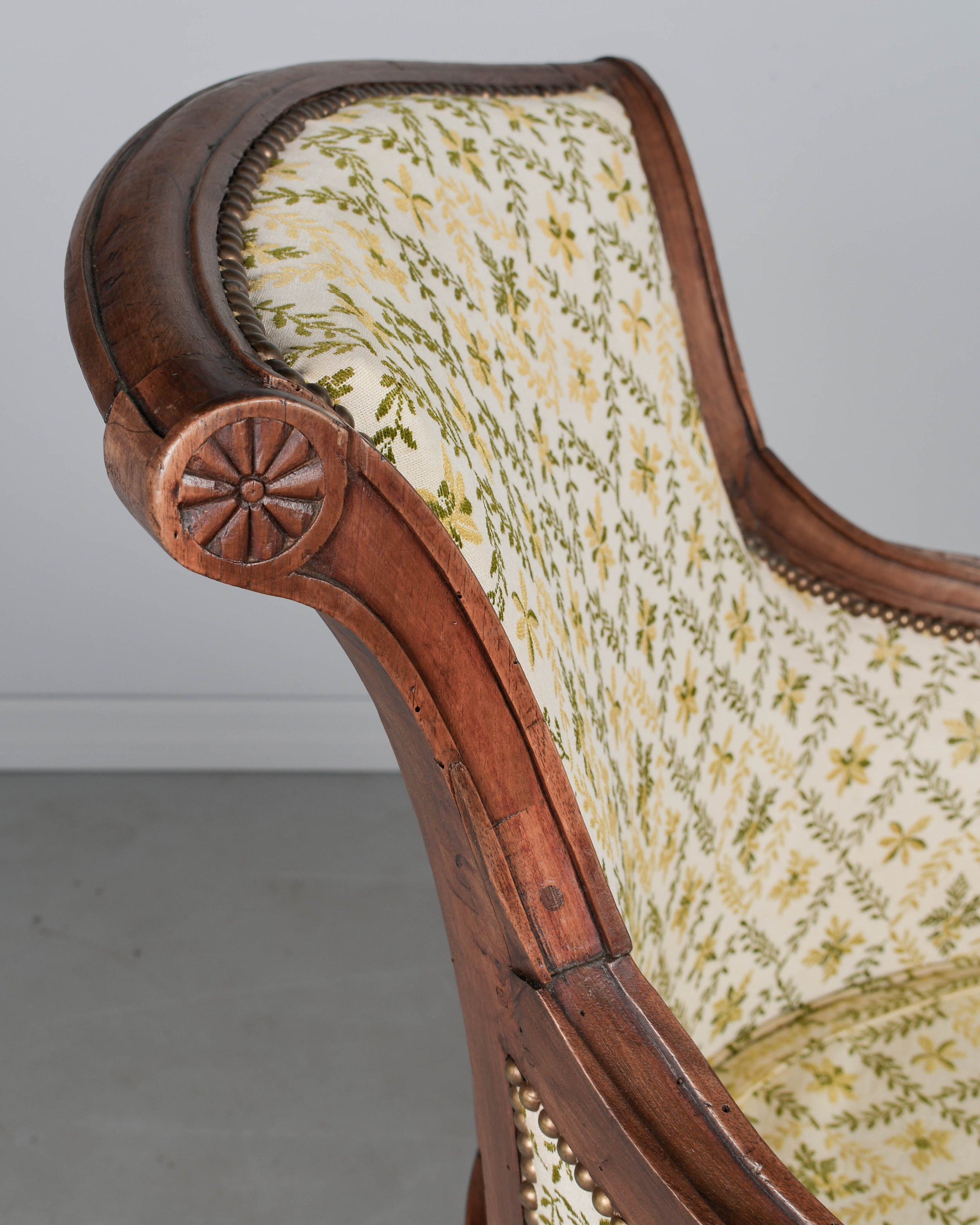
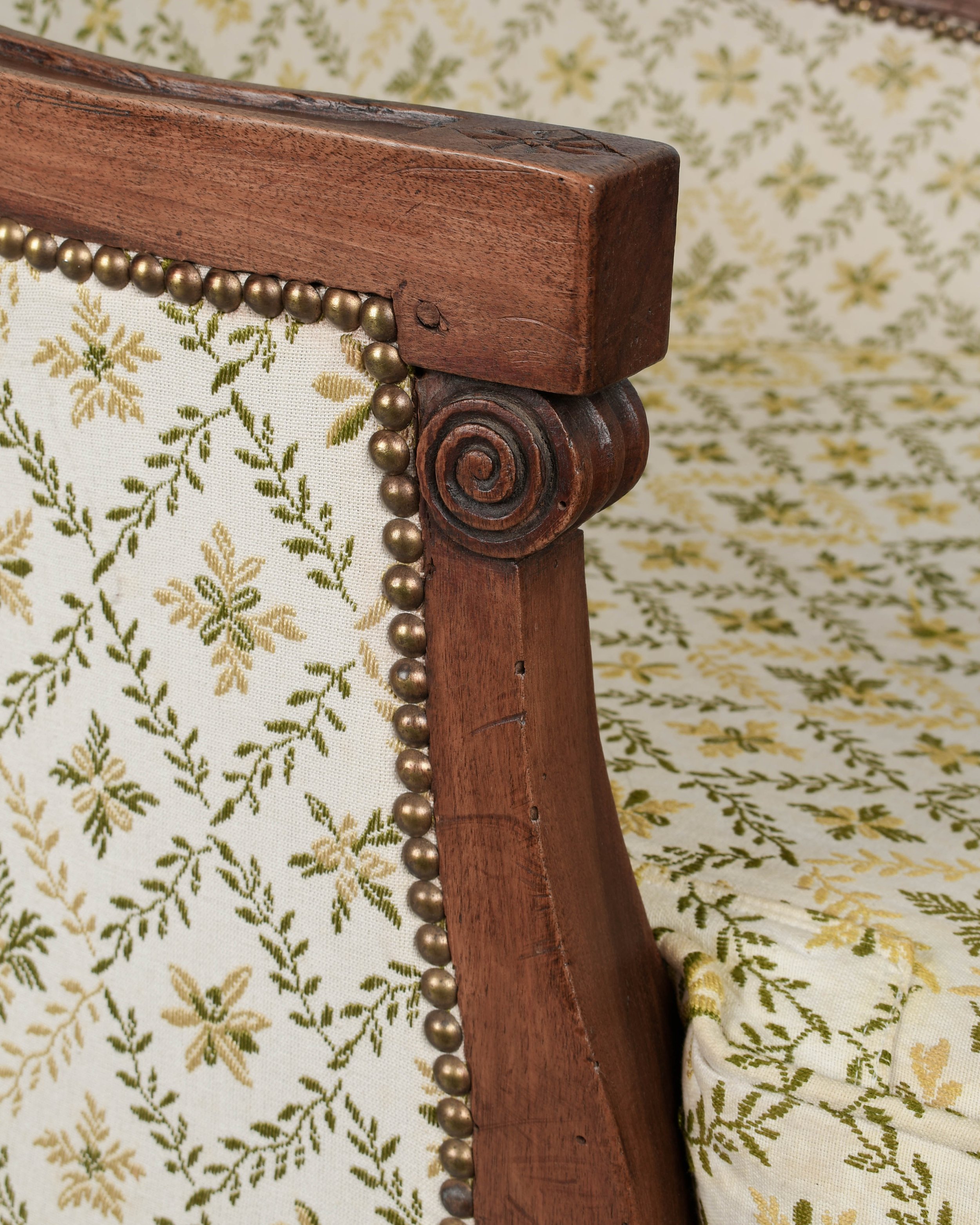
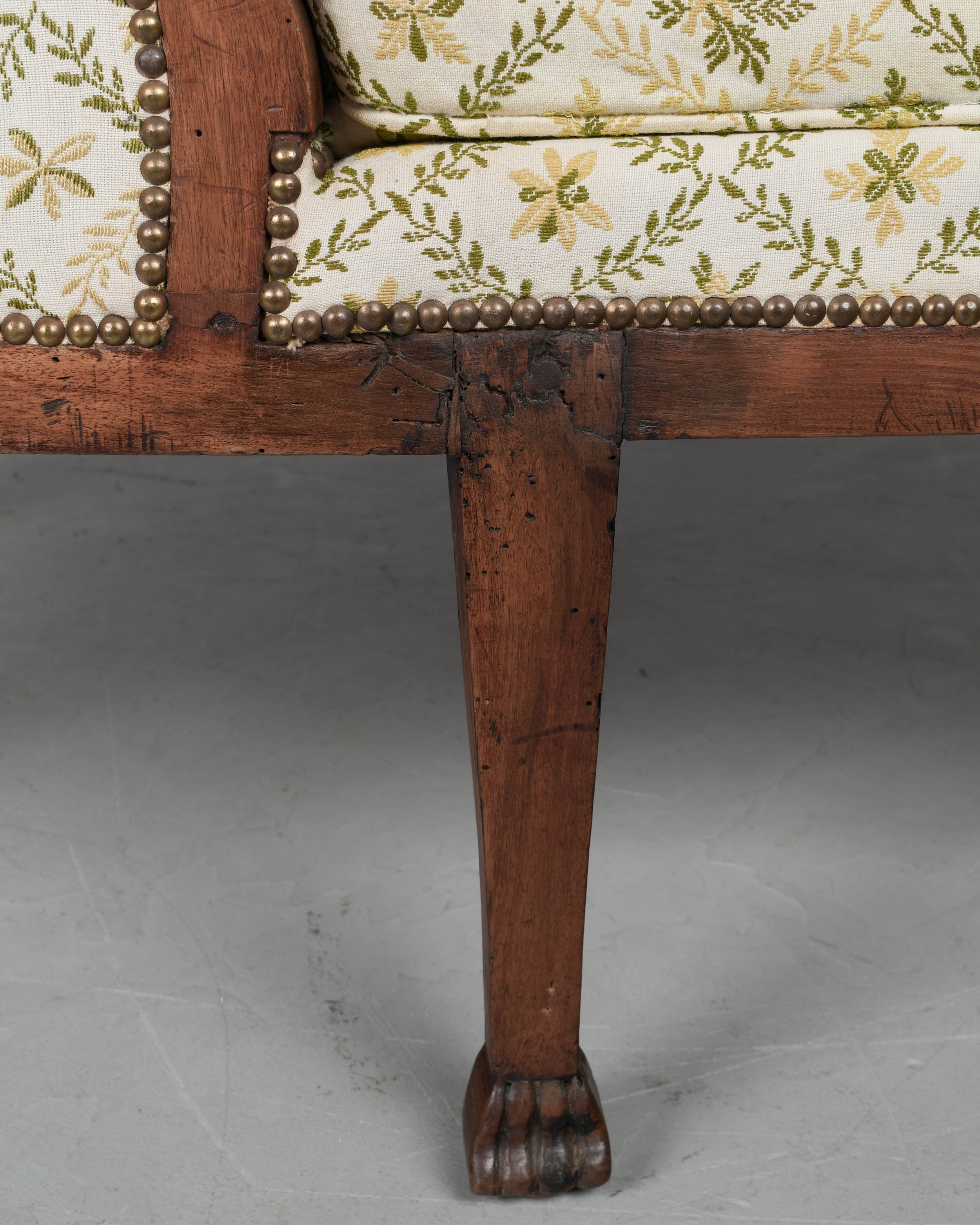
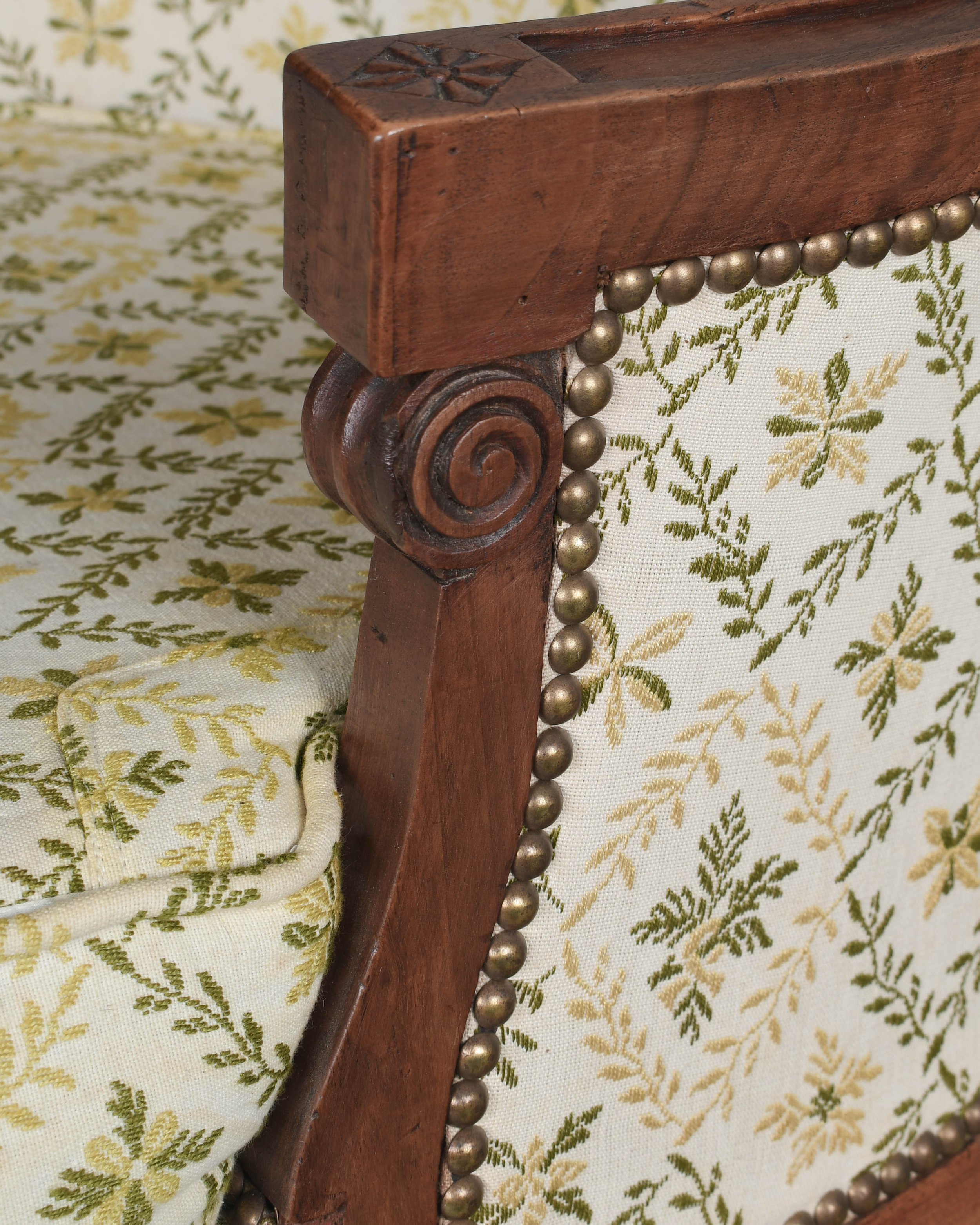
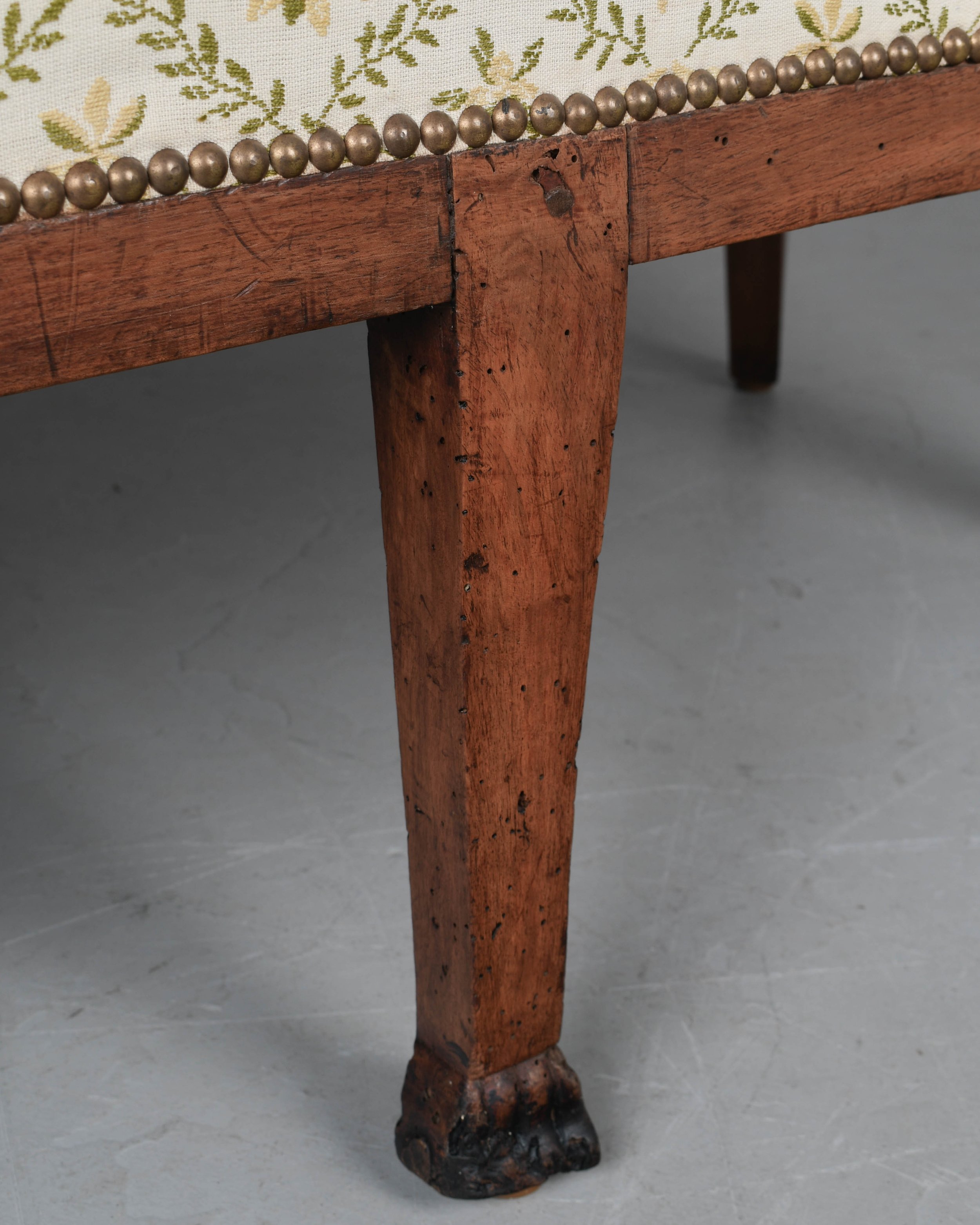
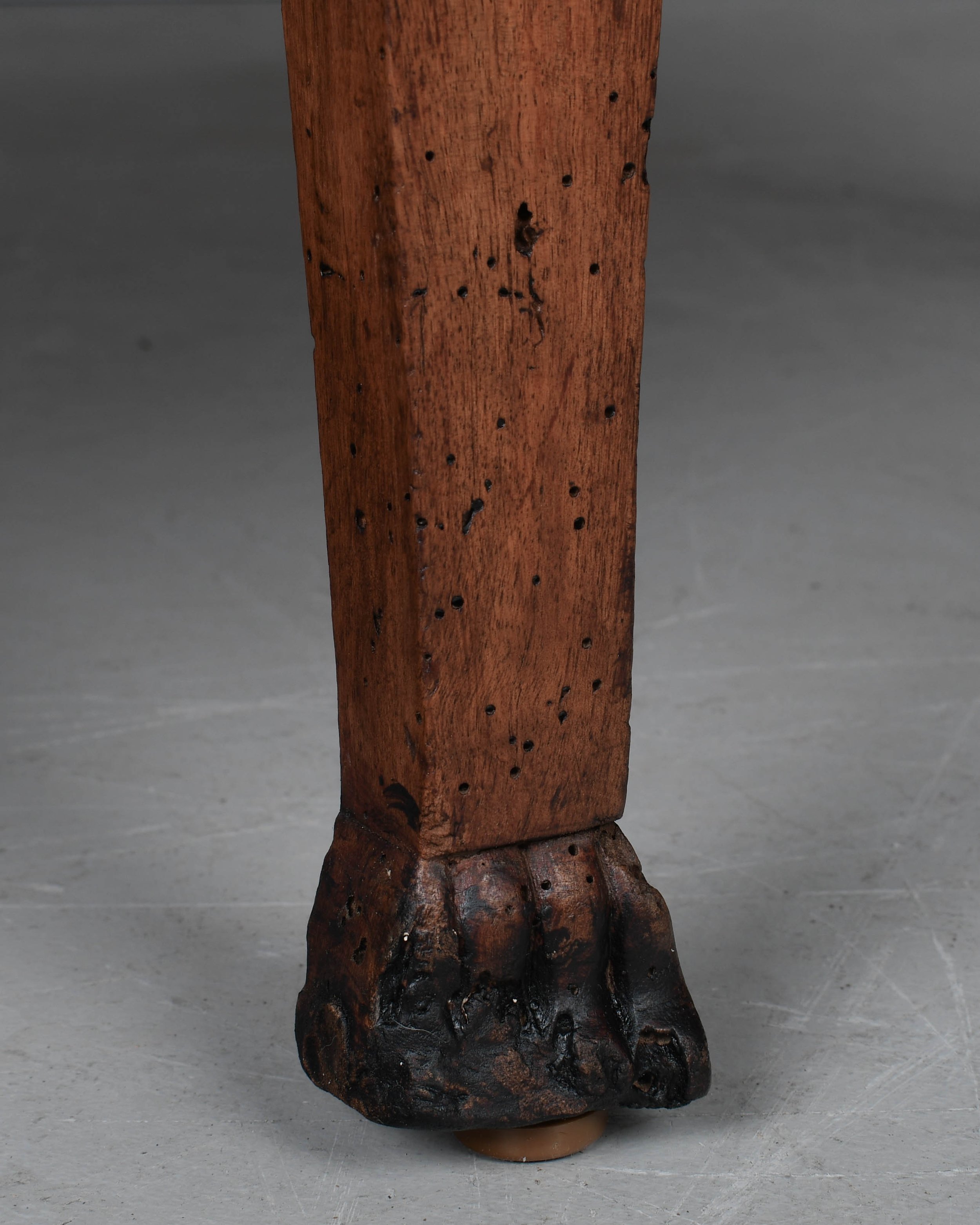
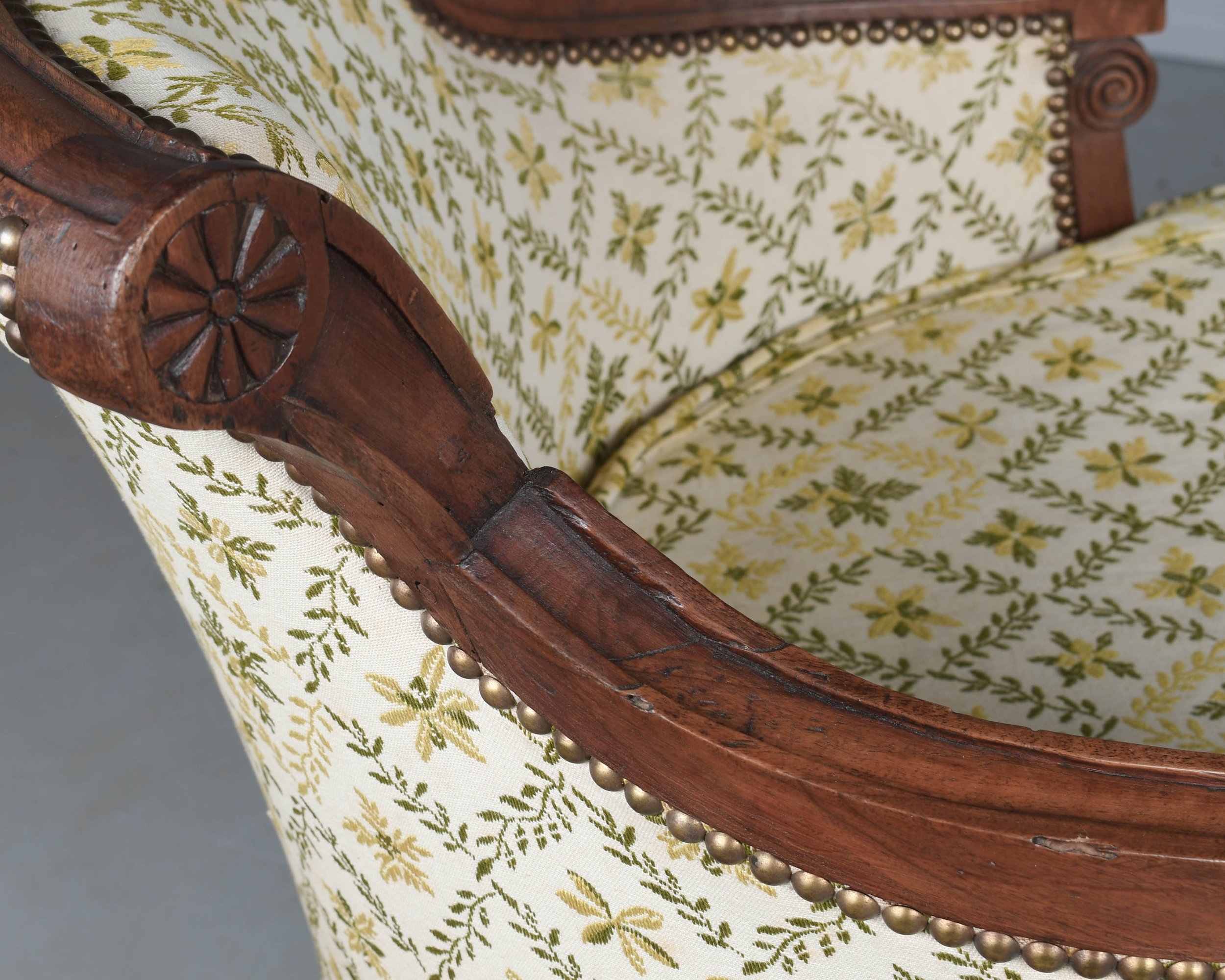
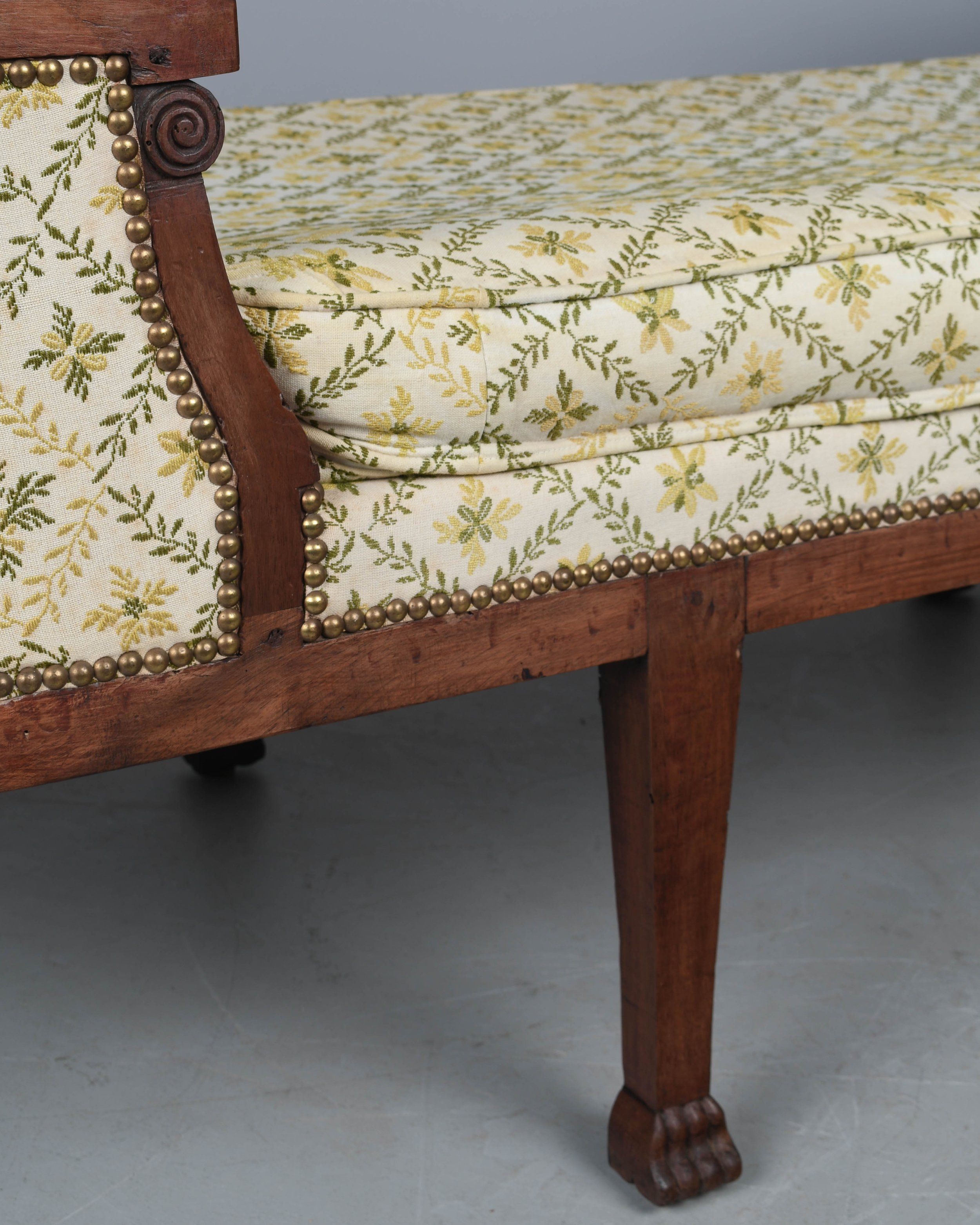
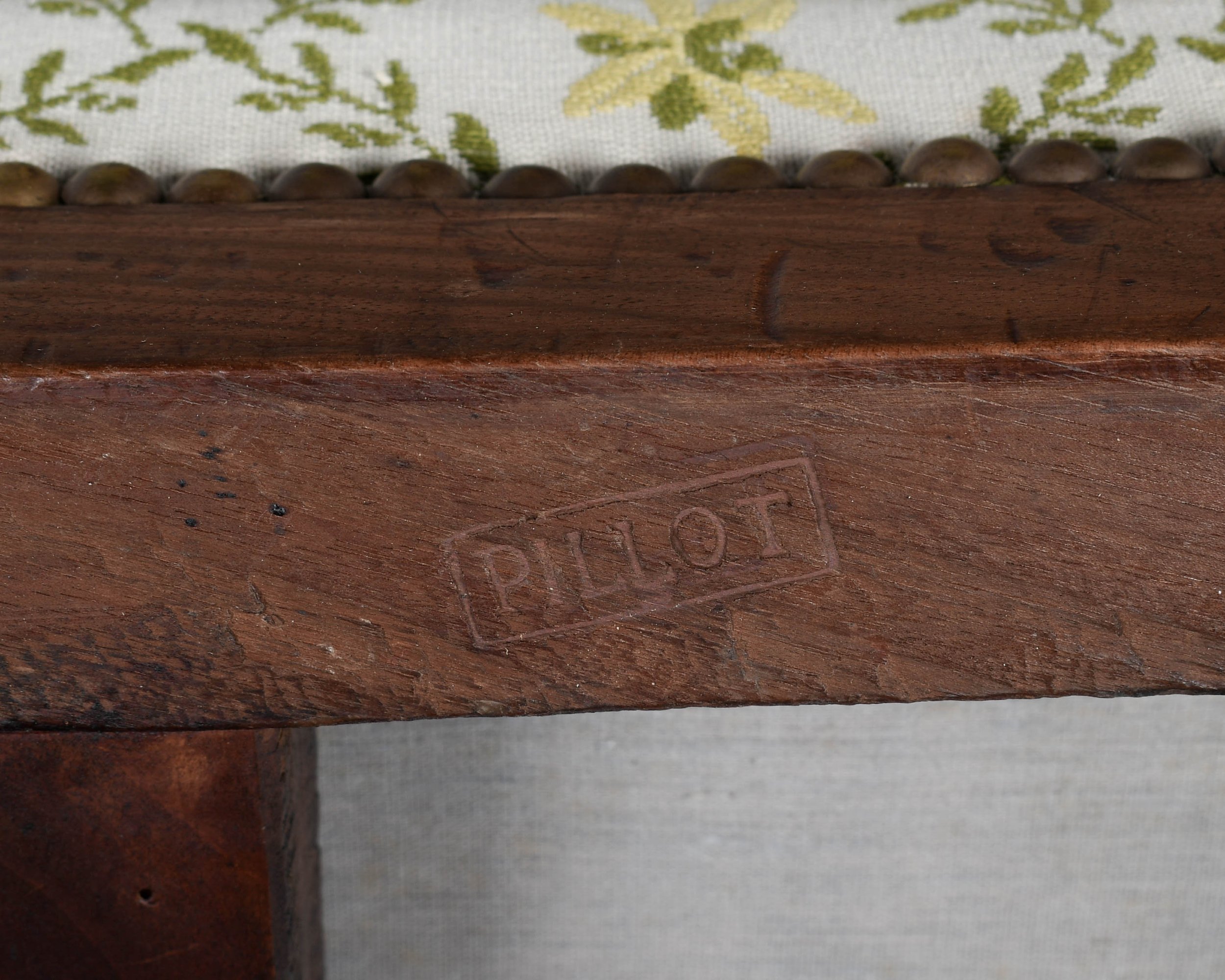
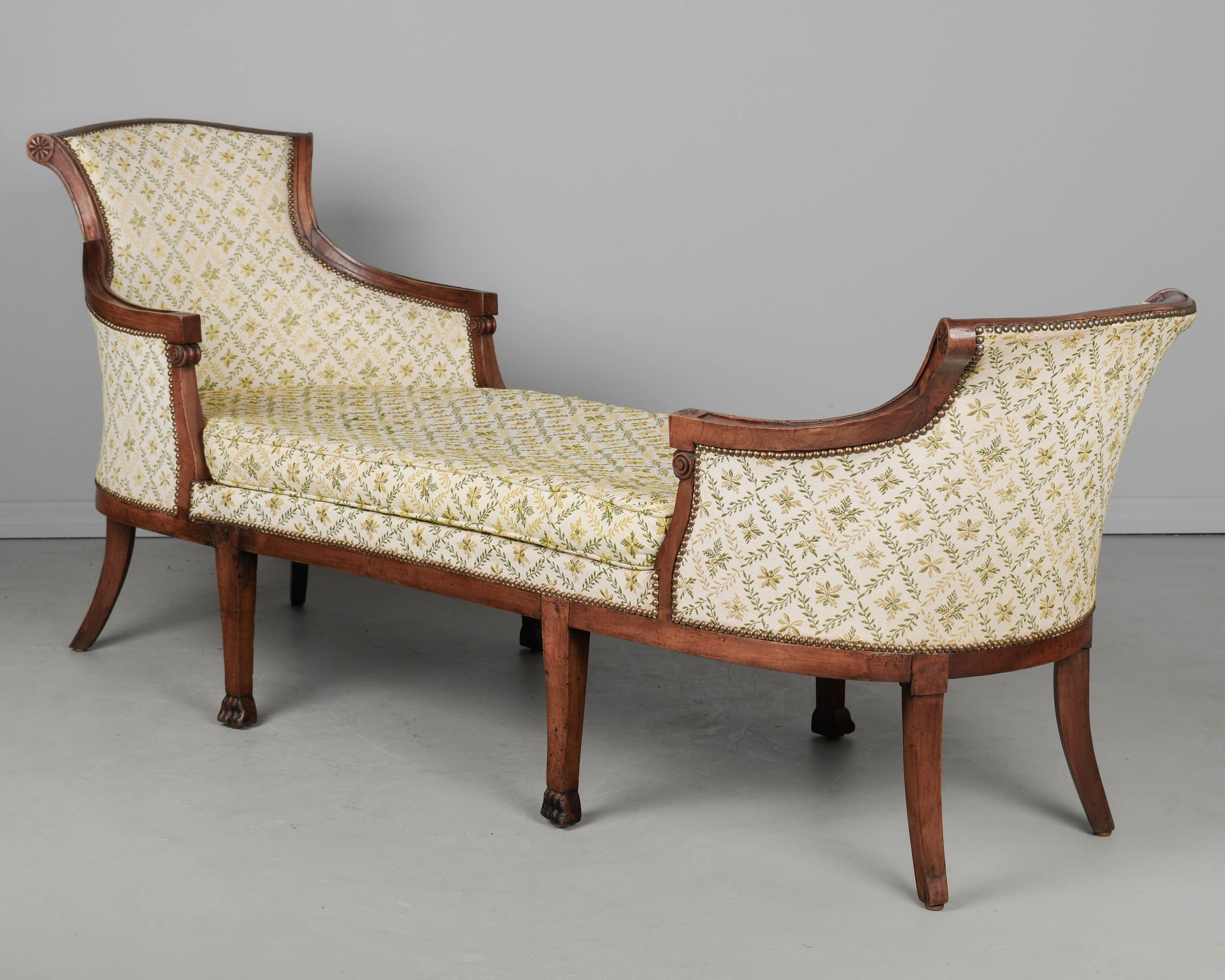
A late 18th Century French Louis XVI style duchesse en bateau, or chaise longue by master furniture maker Pierre Pillot (1748-1822) of Nîmes. Solid walnut frame with hand-carved details and brass nail head trim. Notice the Neoclassical characteristics in this chaise: the unusual tapered feet ending in squared hooves and the subtle carved scroll details under the armrests. Stamped PILLOT to underside. Restoration on two of the legs. Upholstery is in serviceable condition. This is a good sturdy daybed, long enough to stretch out and take a nap. The simple versatile design of this chaise would suit many interior design styles and uses: a rustic modern living room, tradition French Provencal bedroom suite, or Neoclassical library or study. Circa 1780-1810.
Dimensions: 87"W x 29"D x 38.5"H
Inside dimension of cushion: 71" x 27"
Seat: 20"H
#82104
This chaise is emblematic of the fine furniture craftsmanship in the South of France, specifically the city of Nîmes. It is made by Pierre Pillot (1748-1822), one of the most singular and talented master furniture makers of the period. His furniture can be found in French museums, including the Musée du Vieux Nîmes and the Musée Fabre à Montpellier. At thirteen, Pierre Pillot was apprenticed to Parisian master cabinetmaker Mathieu Bauve for a period of six years. Bauve was a prominent 18th century master carpenter (menuisier) specializing in seat furniture who in the 1760s became an early adopter of the avant-garde Goût Grec style, a precursor to Neoclassicism. His furniture was supplied to high-profile locations, including the Chateau de Versailles and the Chateau de Sainte Cloud (for Marie Antoinette).
Pillot moved to Nîmes in 1776, became a master ébeniste in 1780, and set up shop in the Prat district on the Île du Collège, situated in the historic center of Nîmes close to the market. It is historically known in the late 18th and early 19th centuries as the location of renowned artisans' workshops. This district was active at the end of the Louis XVI period, as evidenced by the labels found on consoles from that era. Pillot likely moved from Paris to Nîmes to escape rigid, hierarchical guilds, like the menuisiers-ébénistes. Operating in Nîmes was often cheaper than in Paris, offering higher profit margins for high-quality, hand-crafted furniture.The 18th-century elite in provincial cities like Nîmes sought luxury, creating demand for local artisans capable of replicating or adapting the sophisticated styles seen in Versailles and Paris. This shift would allow a menuisier to operate outside the intense competition and oversight of the Parisian market.
When he moved to Nîmes he brought the excellence of Parisian woodworking to his Southern French workshop. Pierre Pillot’s Parisian mentor was one of the first master furniture makers to pioneer the use of neoclassical design and decor elements. Pillot was influenced by the Parisian Neoclassical trend and seeped in the Classical history of Nimes, deploying these elements in Provence where most masters were working exclusively in the curvilinear floral style.
This piece is stamped PILLOT to the underside. The stamped pieces of furniture mainly consist of seating (chairs, armchairs, wing chairs, sofas). Chests of drawers, wardrobes, and consoles bearing the "Pillot" stamp are rarer. These pieces of furniture are generally quite strongly structured. The legs are very often square in section and tapered, rarely with more than one fluting per side, sometimes reeded. They are frequently finished with square feet. The lower crossbar sometimes features a rectangular central cutout. The ornamental repertoire is of neoclassical inspiration.
In France, a duchesse en bateau (literally "duchess in a boat") primarily refers to specific style of 18th century chaise longue. Originally appearing during the reign of Louis XV, this elegant piece of furniture was designed for reclining in salons or private boudoirs. It features a continuous, elongated seat with two enclosed, upholstered ends (backrests), often of different heights. Its name comes from the fluid, curving lines of the frame that resemble the hull of a small boat. It was traditionally used by aristocratic women as a daybed for resting or receiving guests in a relaxed manner.